
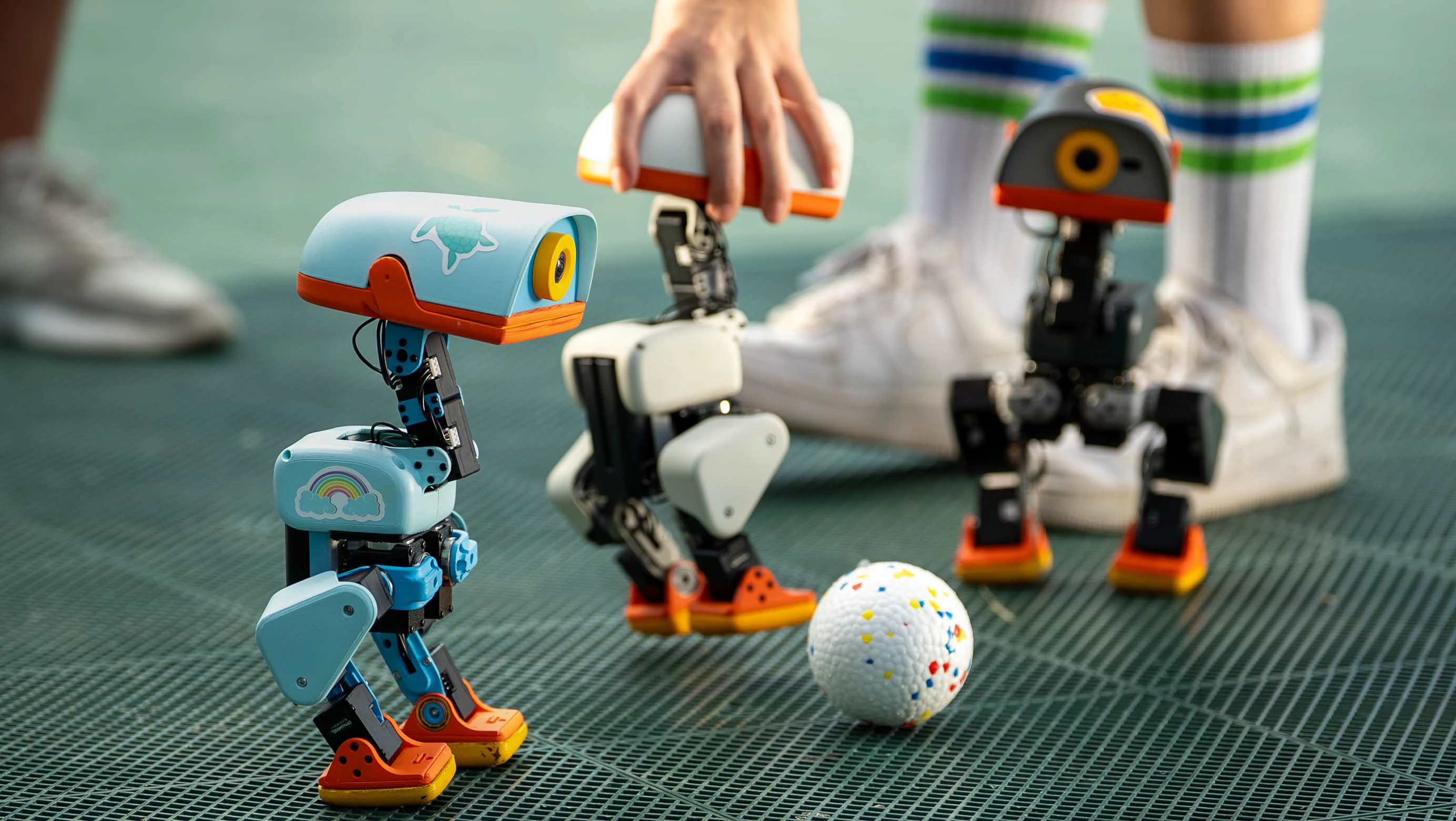
Microduck waddles from foot to foot, sits down, gets back up after a fall and picks up small objects with its beak. It is easy to watch it as though it were a cartoon character, even though this is a real robot standing just 25 centimetres tall. It was created by France’s Pollen Robotics, Hugging Face’s robotics team.
On 21 October, the robots joined NVIDIA CEO Jensen Huang onstage at GTC in Berlin. Their story started earlier, with pre-orders opening in August. Here is a closer look at what Microduck can already do, where its personality comes from and why an owner might want to teach it new movements.
Onstage, Jensen Huang asked the robots to sit down, perform tricks and “take a nap”. This recording shows the demonstration and how Microduck moves alongside a person.
What the little robot duck can do
Microduck has 15 motors, a camera and sensors that help track movement and distance. It weighs less than 800 grams. Its prepared behaviours include walking, sitting, standing up, kicking a ball and grasping objects. With additional roller attachments, it can skate too.
An articulated beak takes the place of hands. To pick something up from the floor, Microduck lowers its body, grips the object and straightens up again. Actions like these make the demonstration easy to follow without technical explanations: you can immediately see what is happening and how much balance a small machine needs.
You can start using the robot with a gamepad, without writing code. Its ready-made movements provide an immediate introduction. For anyone who wants to go further, there are tools for developing new behaviours.
How it learns new tricks
Training starts with a virtual robot in a simulator. A movement can be attempted repeatedly, its results assessed and its performance gradually improved. This is reinforcement learning: the system receives a score for how well it completes a task and adjusts its motor control accordingly.
Once tested, the learned behaviour can be transferred to a real Microduck. This approach lets developers experiment on a screen before seeing how the result works with physical legs, weight and the surface beneath them. Owners can modify the software and share their work with the community.
The openness applies specifically to the software. The manufacturer makes clear that the robot’s mechanical and electronic design files are not open source. Teaching it a new trick also involves working with development tools; it does not mean the duck will independently carry out any request.
Why it feels like a character
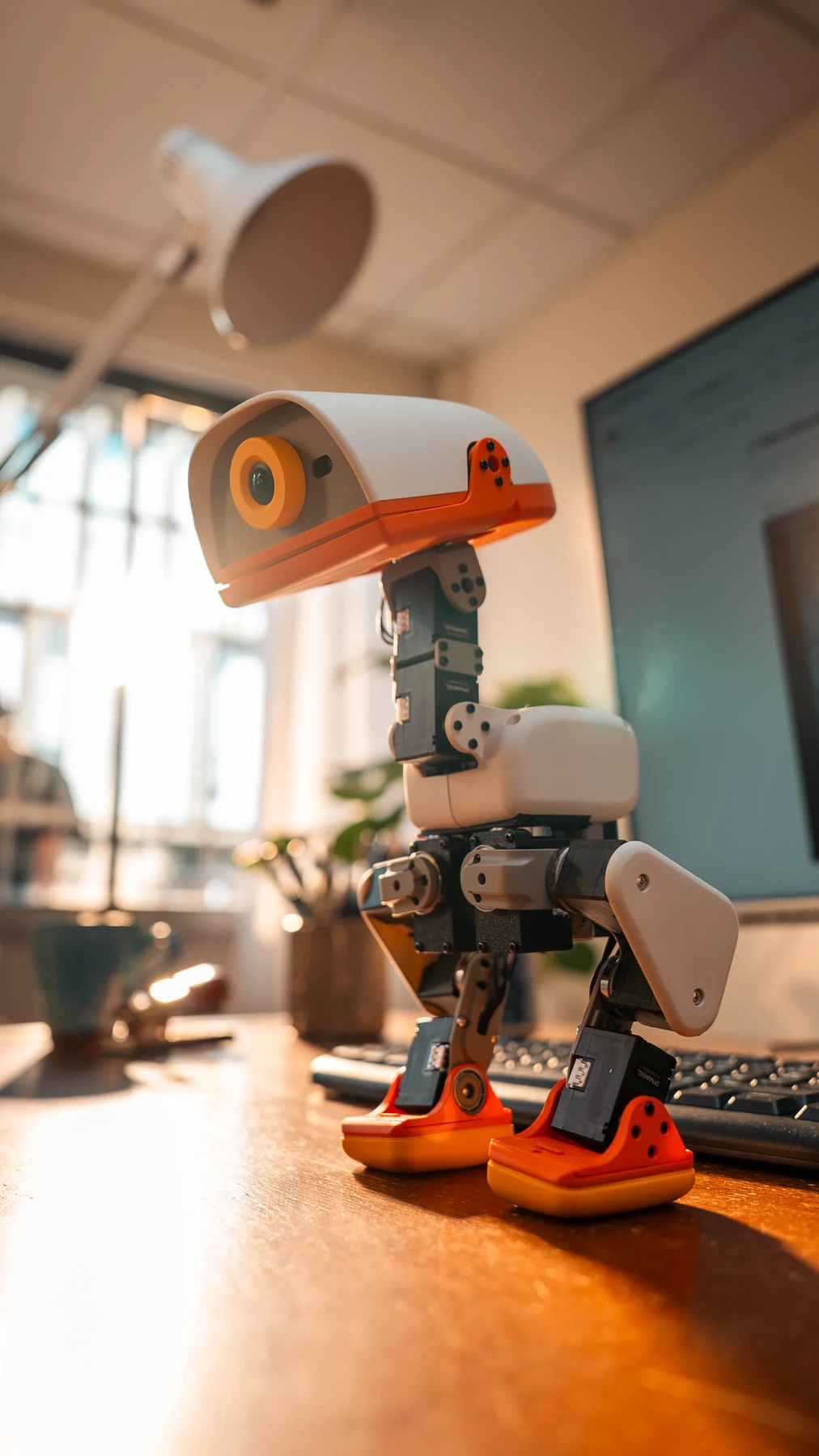
Microduck’s design combines a large head, a small body and broad feet. Its circular camera resembles an eye, while the orange or yellow beak reinforces the duck-like appearance. Motors, wires and joints remain visible: the robot’s mechanical construction is part of its appearance.
Movement contributes to its personality too. The swaying body and turning head recall the gestures of a living creature. Microduck does not speak in words, instead making short electronic sounds. Each robot receives its own audio “voice” when it first starts up.
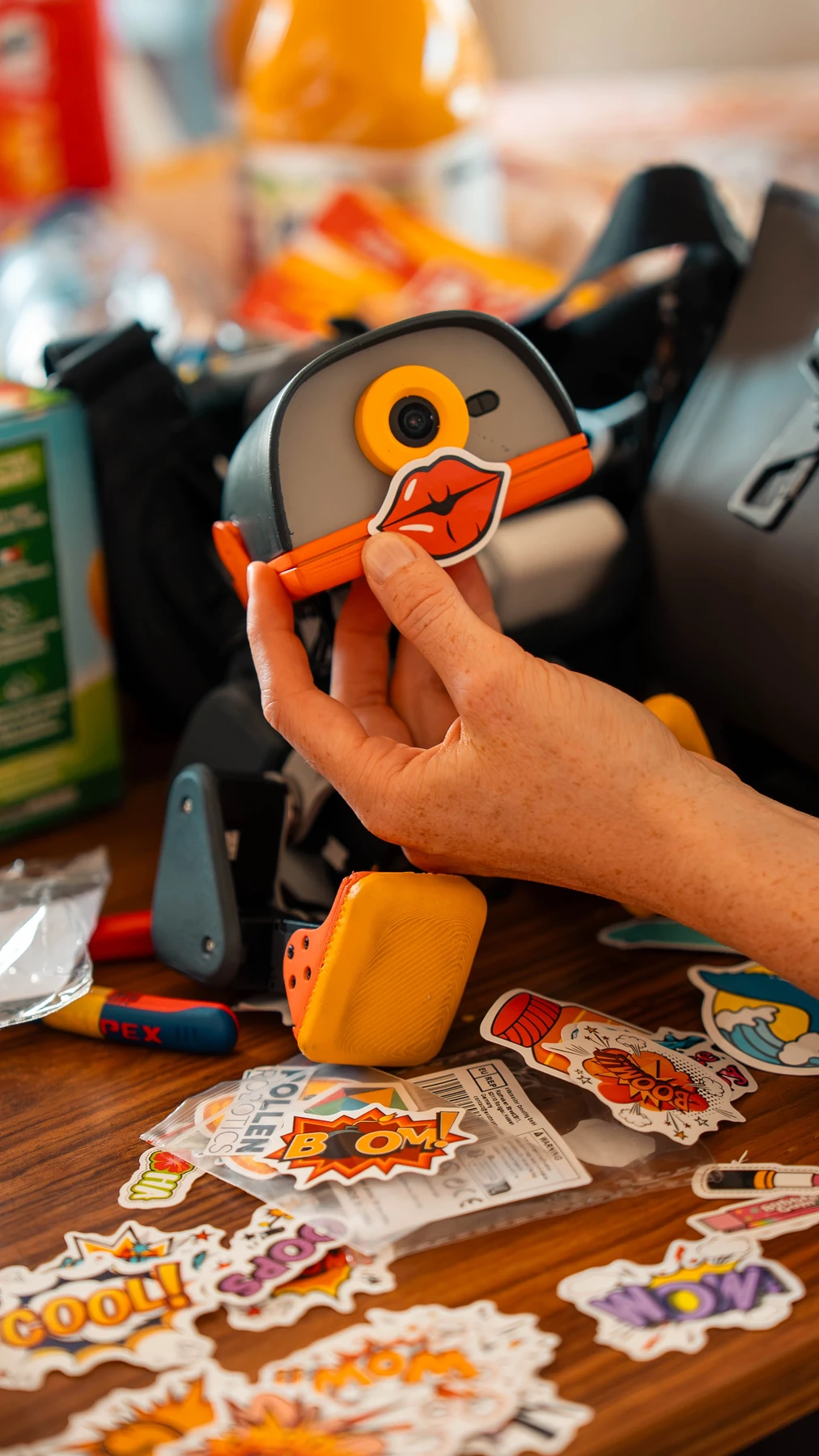
There are four launch colourways: Cream, Graphite, Lavender and Sky. The manufacturer’s photographs also show shells decorated with stickers. For designers, the character-building is worth a closer look: a few simple shapes, colours and movements can make a technical device feel like an individual character.
How much Microduck costs
As of 25 October 2026, the manufacturer is accepting pre-orders at an introductory price of $399 before taxes and shipping. First deliveries are targeted before Christmas 2026. That is an announced target, rather than confirmation that customers have already received their robots.
Microduck can be approached as both a playful robot and a compact platform for experimenting with movement. Some owners may be happy with its existing tricks. For others, the most interesting part will begin when they try to teach it something of their own.
Sources: Microduck, the project introduction, Pollen Robotics’ official press kit, GTC Berlin 2026. Photography and introduction video: Pollen Robotics.

No comments yet. Start the conversation.