
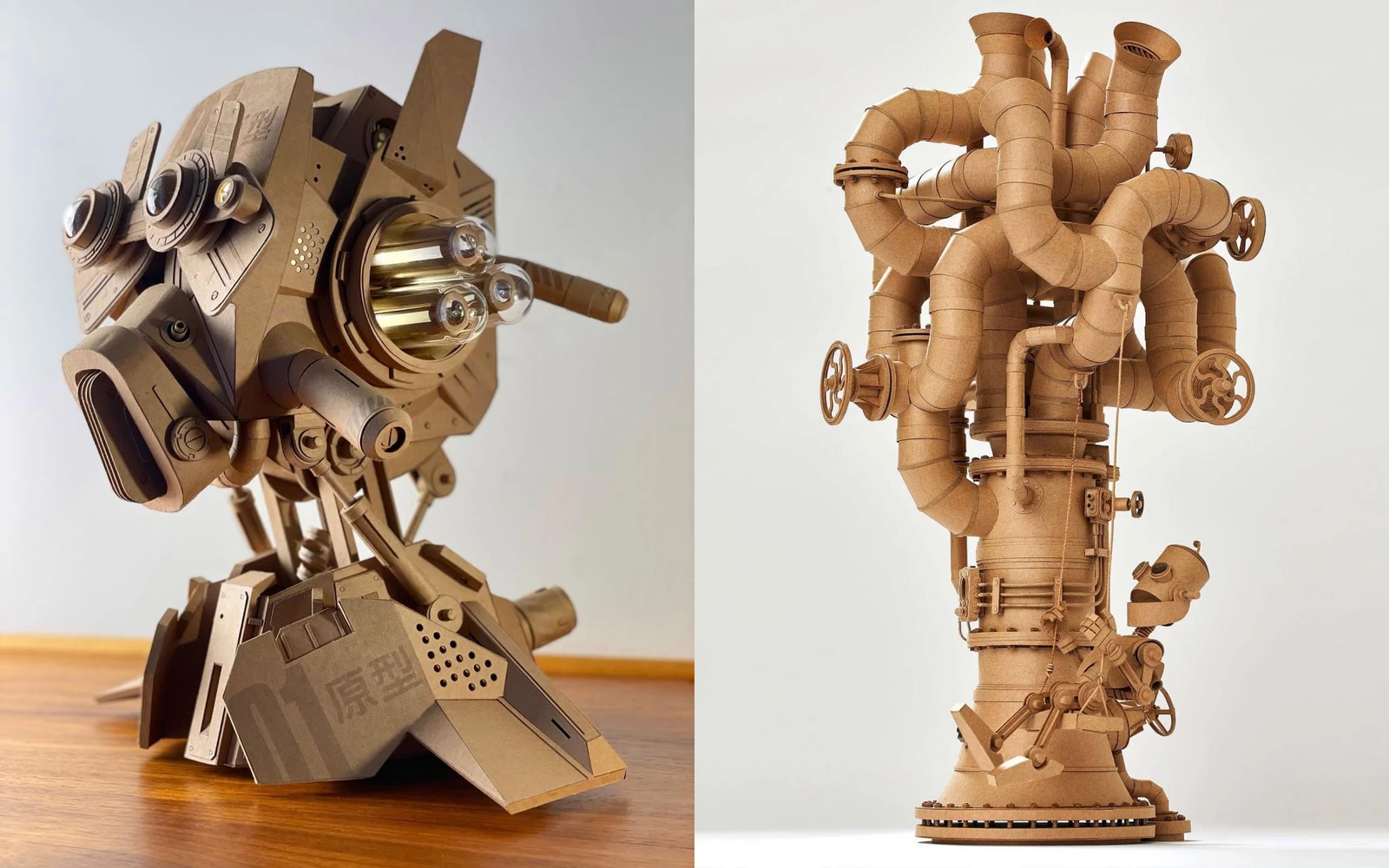
Based in Melbourne, Olijnyk came to sculpture through graphic design and began working with cardboard in 2017. His official biography describes a process without prepared plans, digital 3D modelling or automated cutting. Each form develops during construction, with a scalpel serving as his main tool.
In an interview with Beinart Gallery, he connects this approach to his earlier design work. Before computers became standard, presentation artwork and packaging mock-ups required careful cutting and assembly by hand. Those practical skills later found a place in his sculptural characters and structures. Cardboard lends itself to this approach: it can be bent, folded and glued, while finished pieces remain lightweight.
The photographs reveal an attention to small components: curved pipes, valves, steps, circular openings and layered surfaces. One piece resembles a mechanical head; another brings a lighthouse and a boat together. Their unusual combinations suggest an imagined world in which each structure seems to have a purpose, even when that purpose remains unclear.
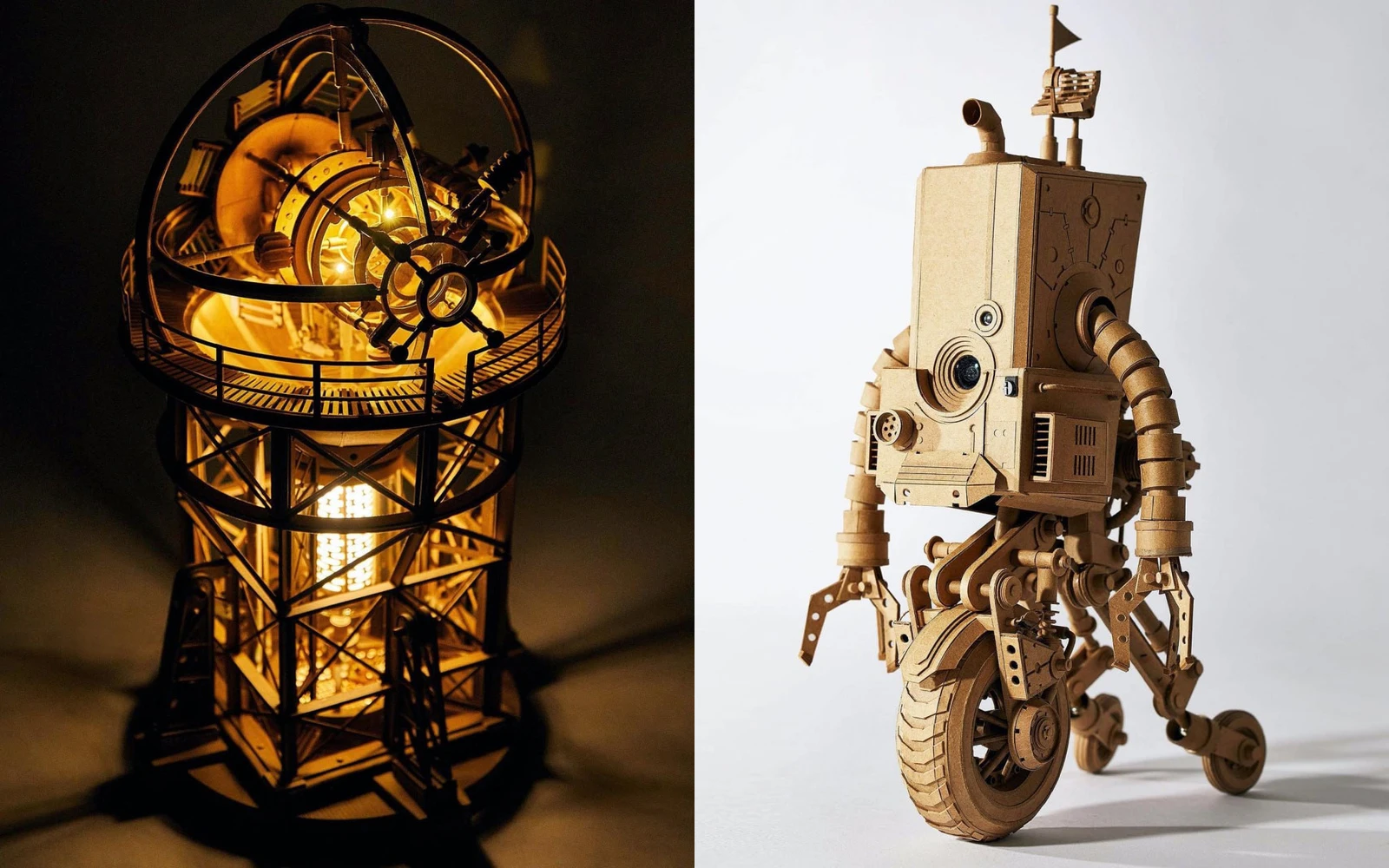
Some sculptures incorporate movable joints, while others include LED lighting. The light draws attention to internal structures and gives open frameworks greater depth. The cardboard itself remains visible in the edges, textures and assembled layers shown in the photographs. Looking at those individual elements makes the care involved in building the larger object easier to appreciate.
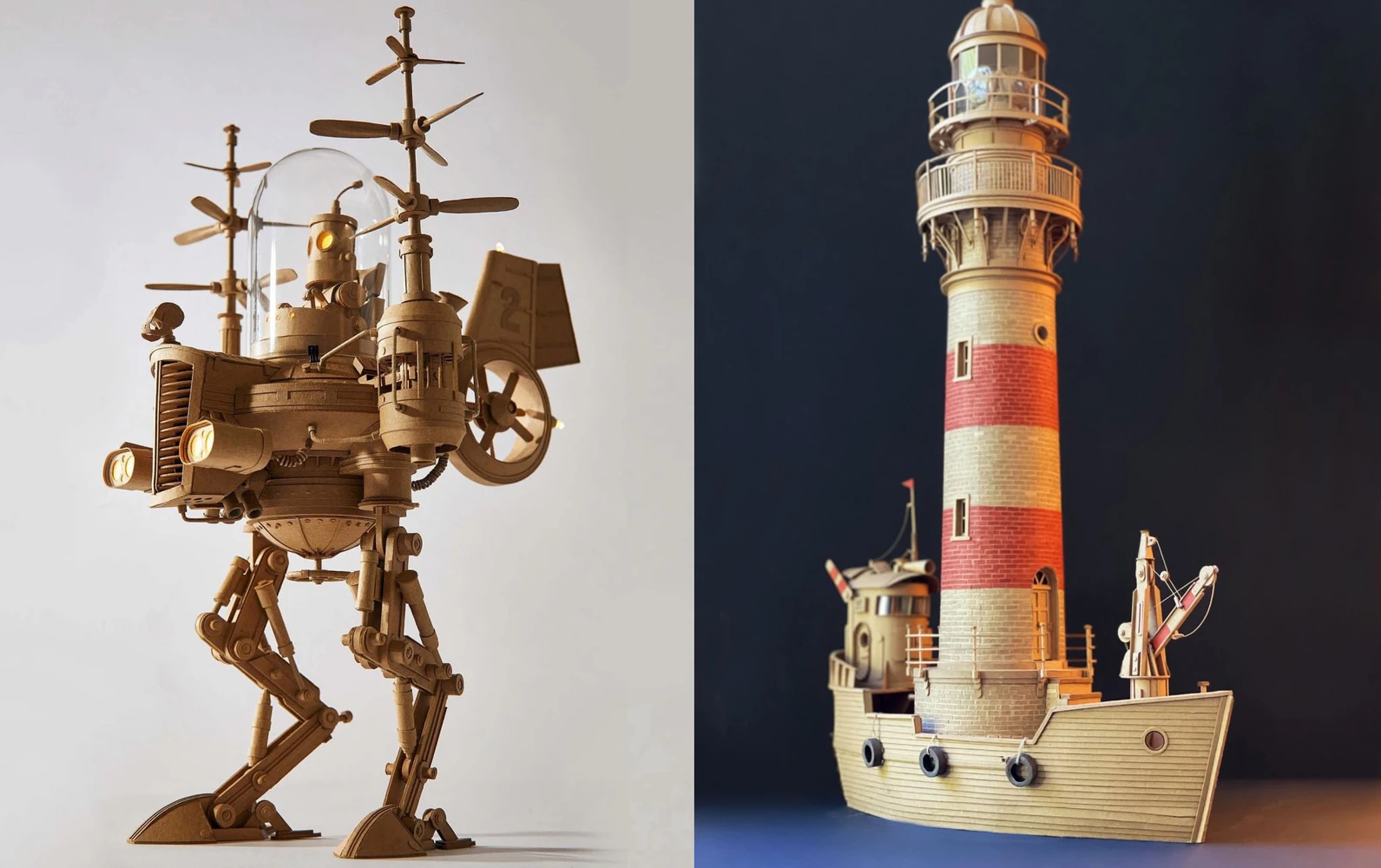
For designers, the collection offers a useful study of how a single material can connect very different forms. Notice how repeated parts establish rhythm, how the silhouettes change and where illumination directs the eye. The photographs invite a second look, allowing details that initially recede into the background to become the focus.
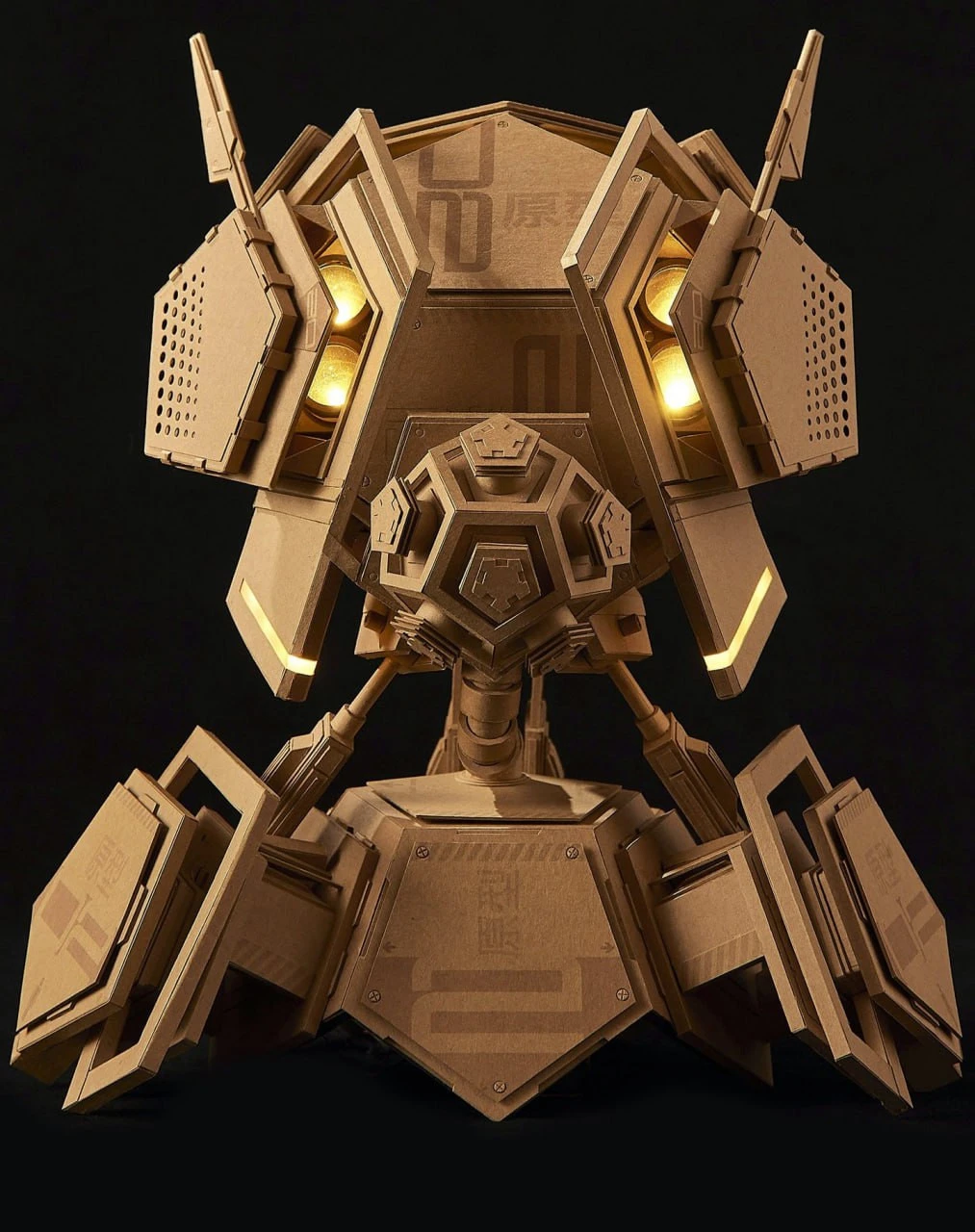
Sculptures: Greg Olijnyk.
Greg Olijnyk – About (official artist biography) · Interview with Greg Olijnyk – Beinart Gallery · Greg Olijnyk – The Contrivance, Beinart Gallery

No comments yet. Start the conversation.