
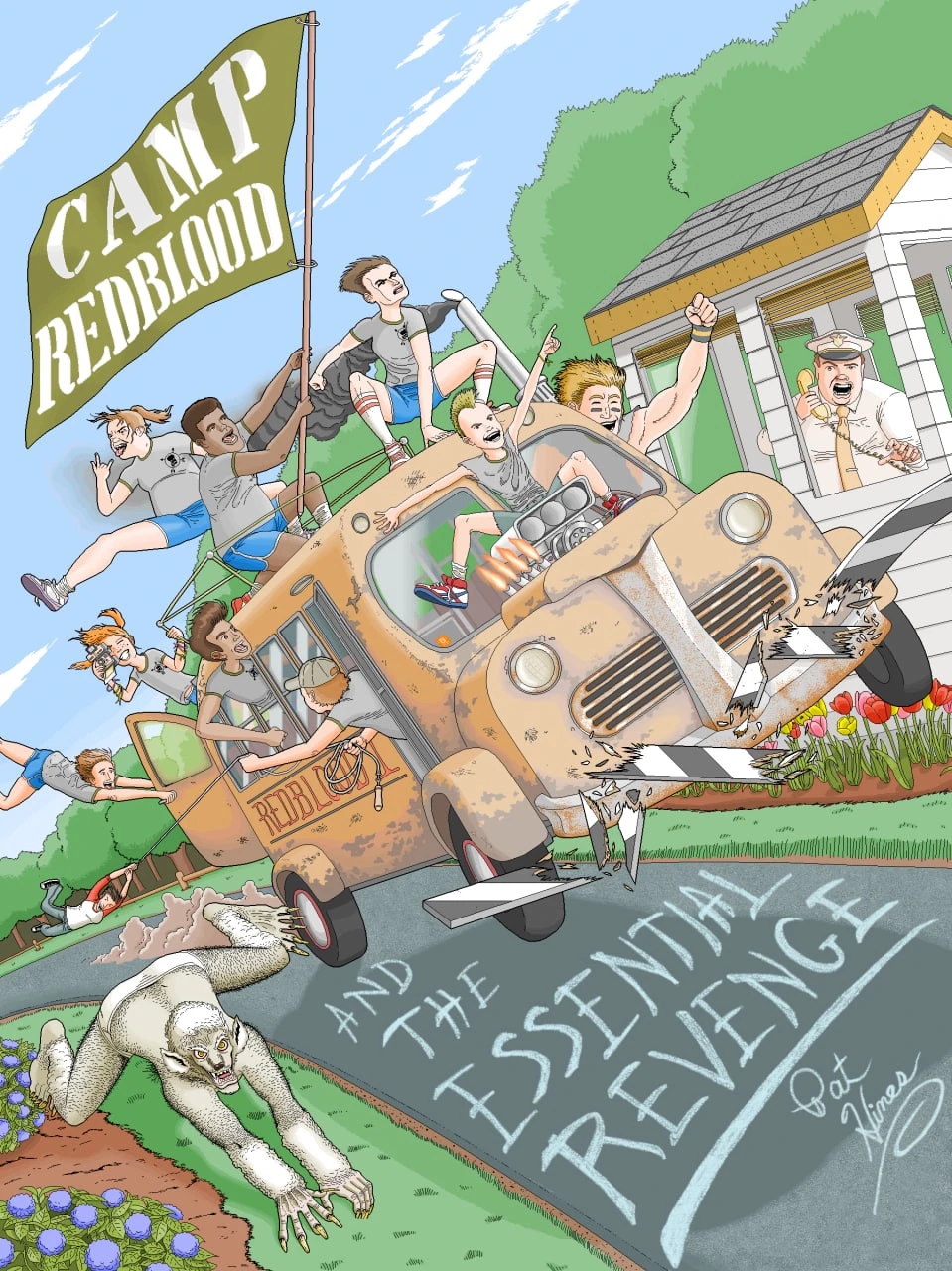
Patrick Hines drew these scenes with a mouse in Microsoft Paint. Night-time adventures, mountain roads, crowded scenes, and an entire summer camp emerge through his illustrations. Camp Redblood was already being presented in 2016, years before today’s text-to-image boom.
An ordinary program, an elaborate world
Microsoft featured Hines’s Paint work in January 2014. A few years later, he presented his illustrated novel Camp Redblood and the Essential Revenge. In his entry to The Book Designer’s April 2016 cover awards, he explicitly identified Paint as the illustration tool.
That chronology matters when looking at these images today: they predate widespread image generation from text prompts. Microsoft announced the preview of its DALL·E-powered Paint Cocreator in September 2023. Hines’s process involved manually building pictures with lines, colour, and a mouse.
An illustrated novel, not a comic
In a 2018 PRINT interview, Hines corrected a common description of the project: Camp Redblood is a prose novel with illustrations, rather than a graphic novel. Its comic-like drawing style does not replace the written narrative. He described two years spent writing and another year illustrating. References to ten or fifteen years concern his experience with Paint, not the time spent producing this book.
The story revolves around a summer camp and its rivalry with another camp. In an interview with The Manual, Hines also described a deeper concern: how people respond when they witness bullying. Humour, danger, and camp traditions give that story a world of its own.
Working with simple tools
Hines explained that he used an older Paint version for outlines and Windows 10 Paint for colouring. He drew with a mouse, using the line tool to construct shapes. He estimated around 10–20 hours for one Camp Redblood illustration. These details describe his process at the time of the interview, rather than his current software setup.
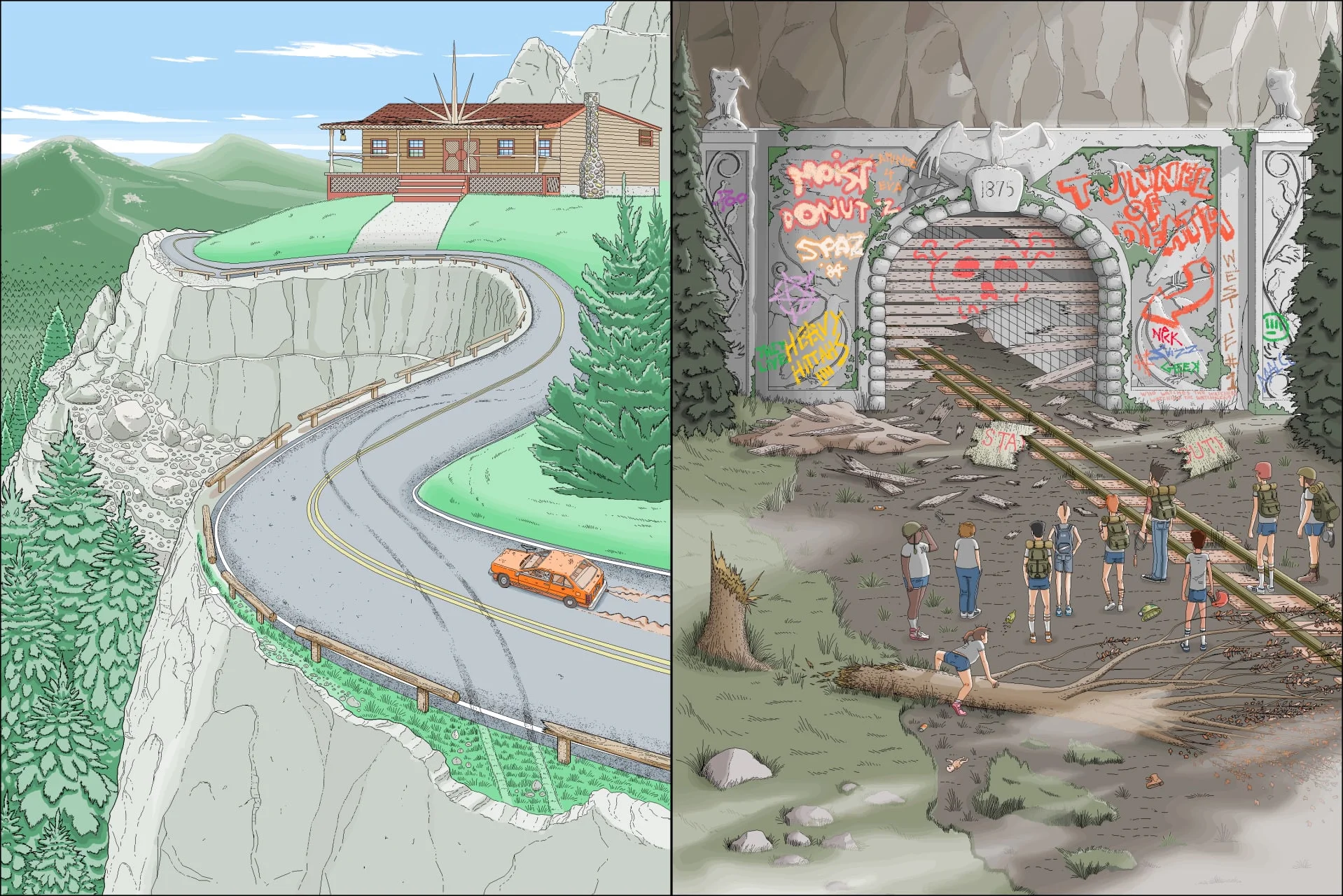
In the road scene, a long curve leads the eye from the car towards the building above the cliff. At the tunnel entrance, railway tracks establish a similar direction. Even a small set of tools can organise a scene so the viewer understands where to look.
Lighting changes the mood
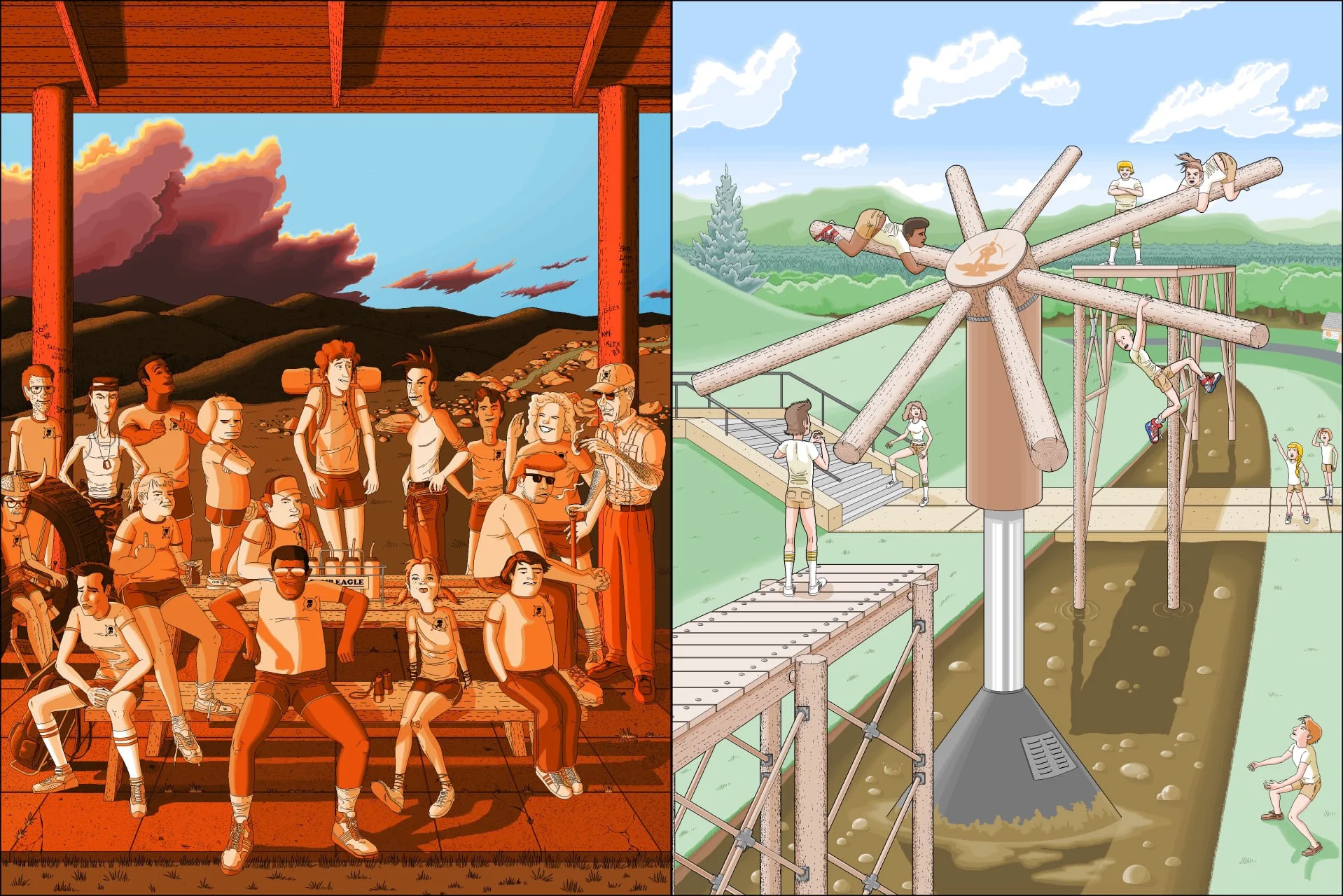
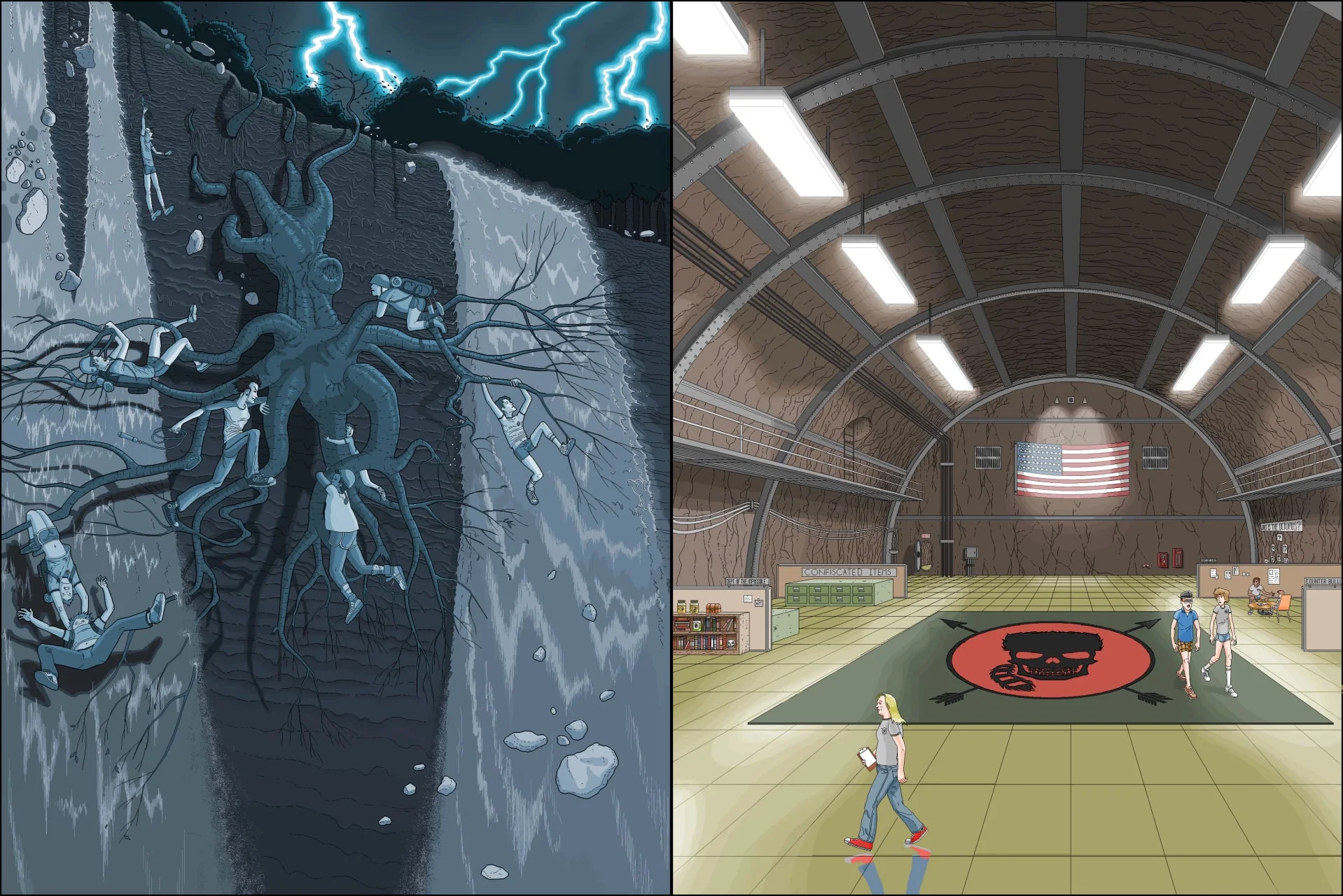
The sunset group scene is saturated with warm orange light. The lightning scene uses cool blue tones. Inside the hall, lamps, repeating arches, and floor lines establish the room’s scale. Different lighting and composition problems are resolved within one recognisable visual style.
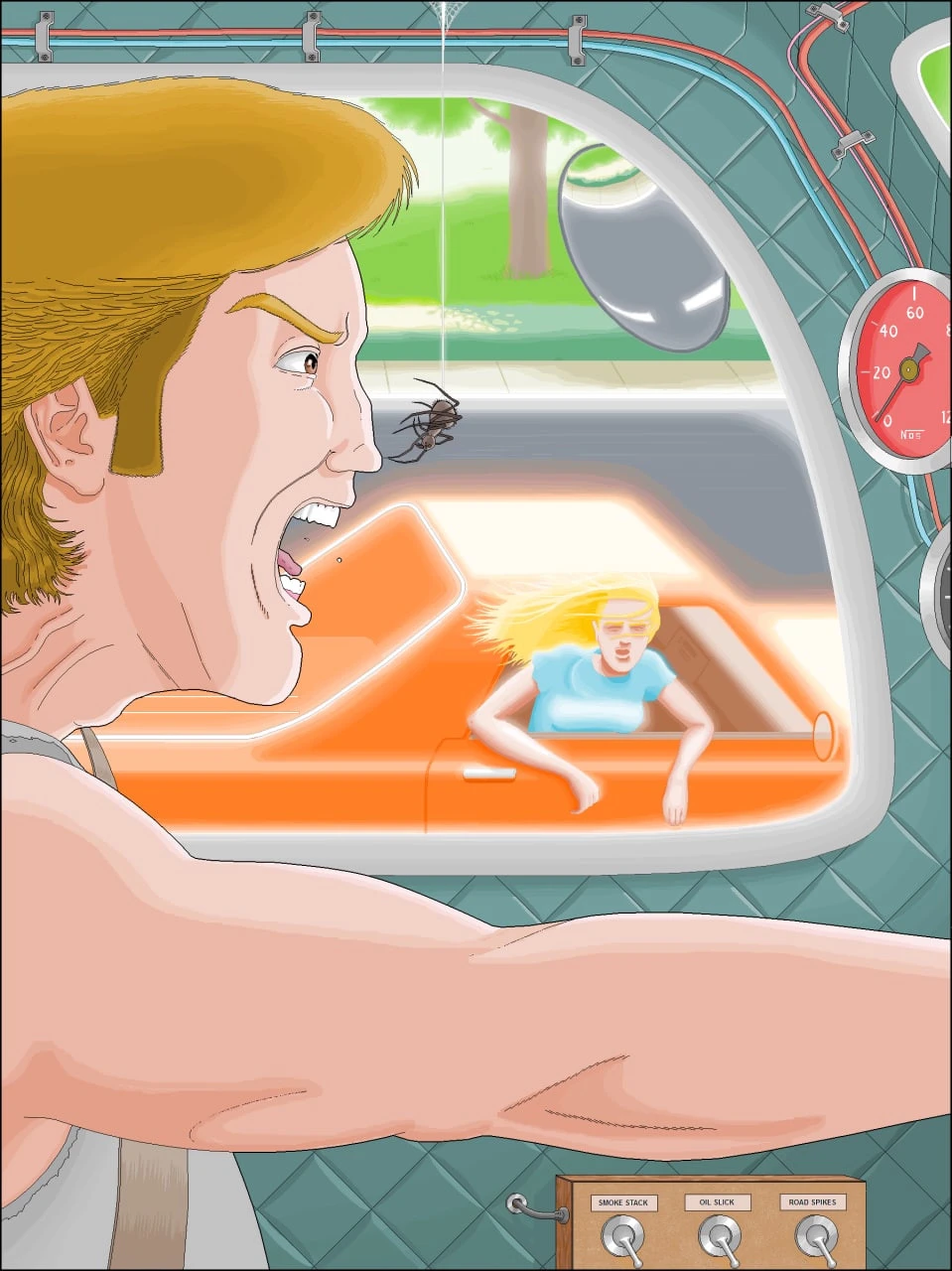
The interest goes beyond the phrase “made in Paint.” Look at the shifts between wide shots and close-ups, the arrangement of characters, and the use of colour. The software provides a set of tools; a readable scene comes from the artist’s decisions.
Sources: Microsoft, 2014 · The Book Designer, 2016 · PRINT, 2018 · The Manual · Microsoft, 2023
No comments yet. Start the conversation.