
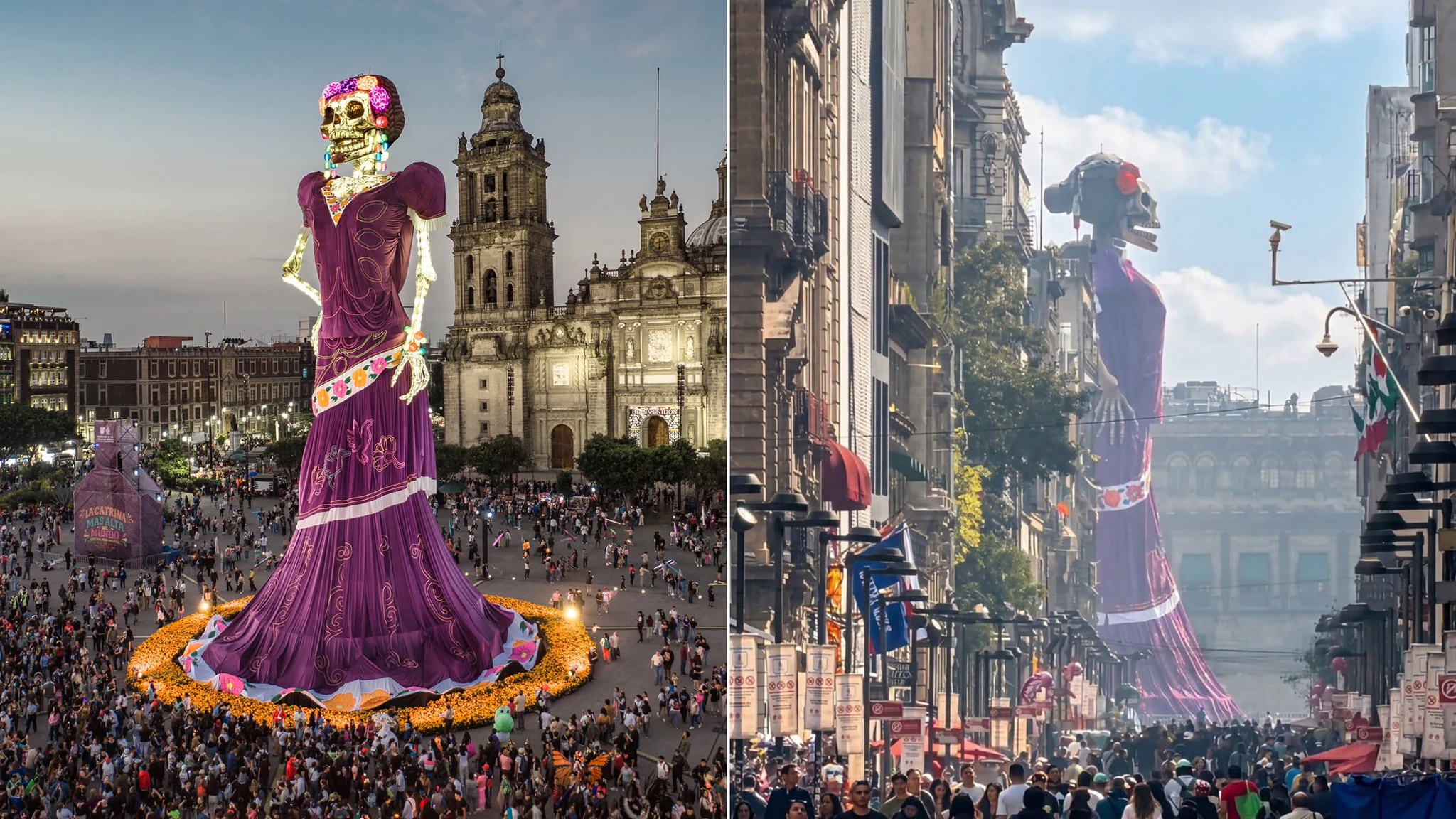
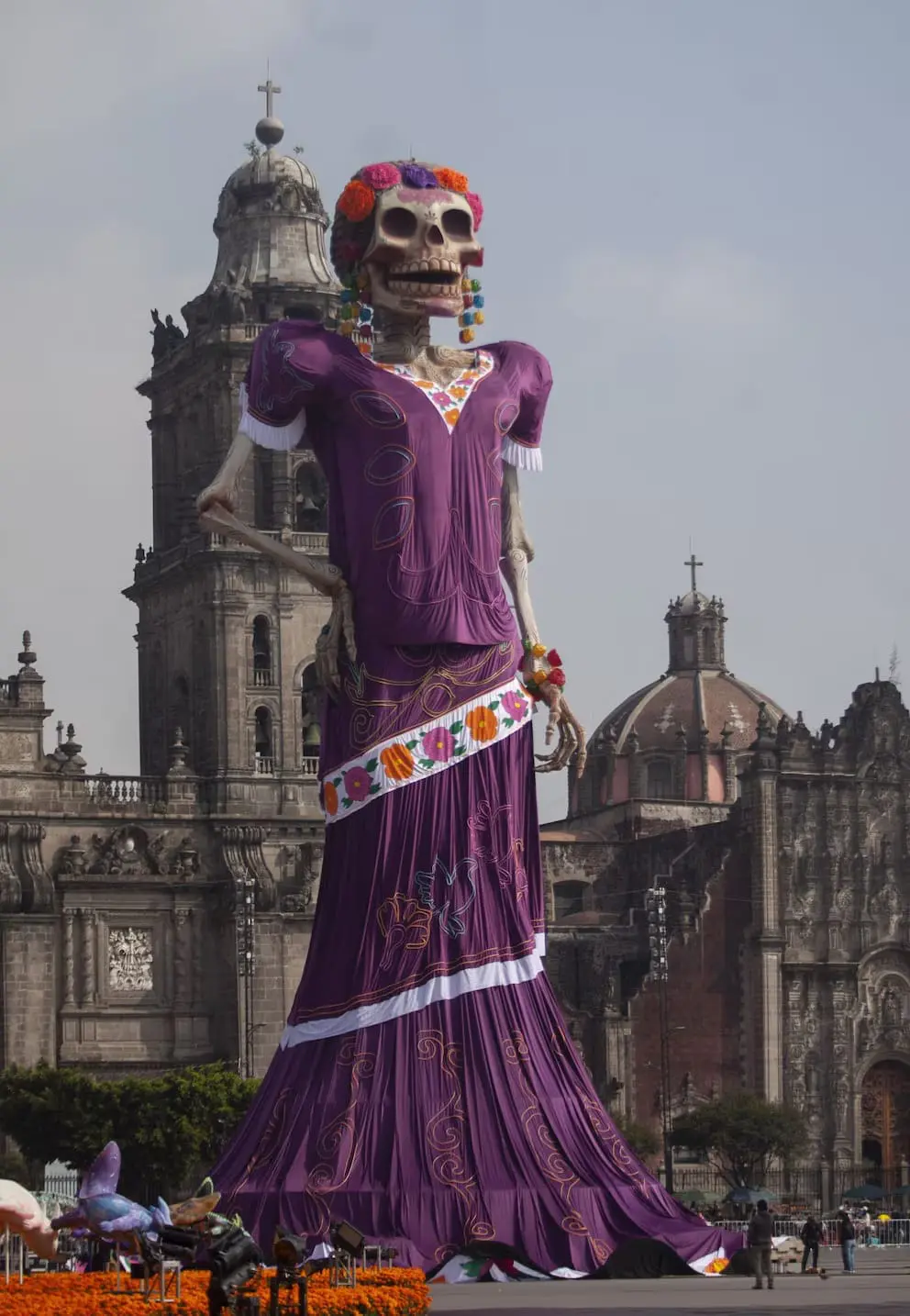
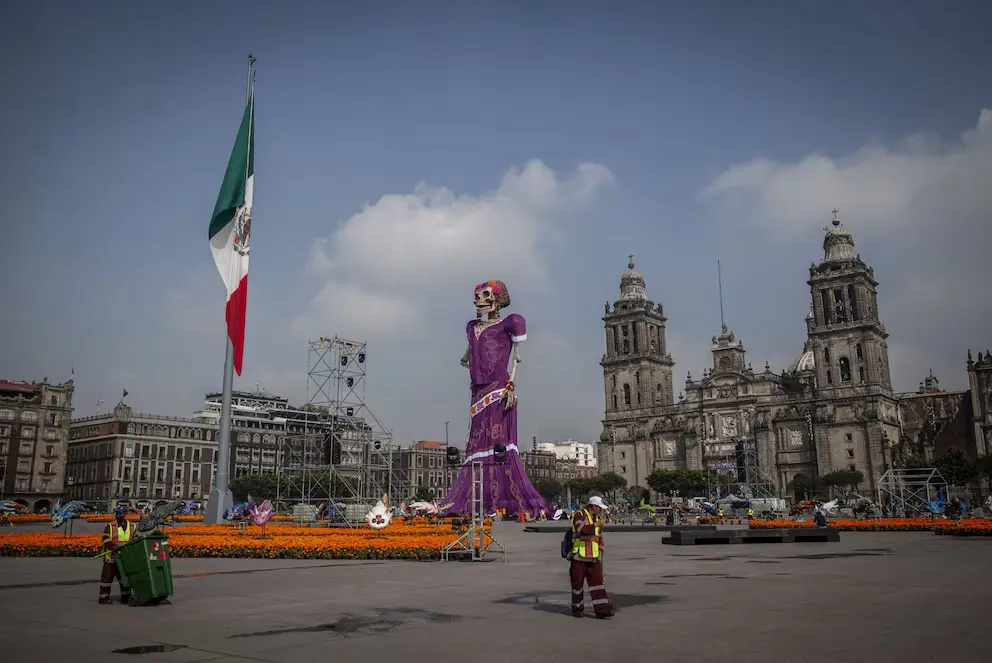
Mexico City has put up a Catrina measuring 33.411 metres. The enormous skeleton wears a purple dress and rises above the buildings surrounding the Zócalo, the capital's main square. On 29 October, it was recognised by Guinness World Records as the tallest Catrina ever made.
The location could hardly be more prominent: the square outside the Metropolitan Cathedral. The figure forms part of the city's Día de Muertos celebrations. Folk-art sculptures, flowers and lights fill the space around it. Visitors can see the installation free of charge until 2 November.
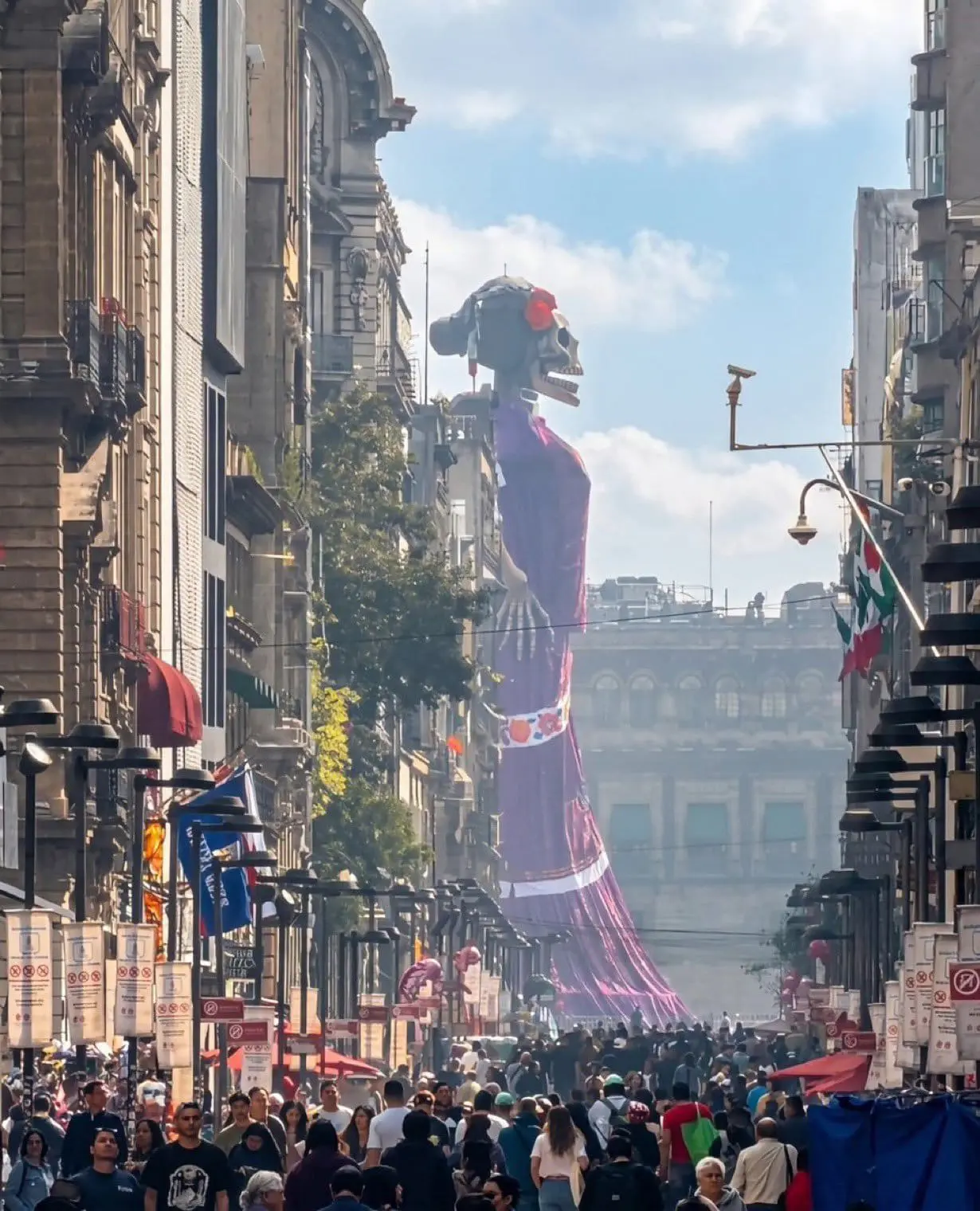
Building an 11-storey-tall figure
Mexican workshop Taller de Arte Xibalbá built the sculpture under the direction of Carlos Camilo Báez. More than 140 craftspeople, artists and technicians worked on it. At roughly the height of an eleven-storey building, it was not the sort of temporary decoration that could simply be carried into the square.
The purple dress is about 27 metres long. Its floral patterns and the red flowers above the skull provide much of the colour. making the costume took up to 3,500 metres of fabric. Hidden beneath it is a steel frame weighted with concrete. Digging permanent foundations into the historic square was not an option.
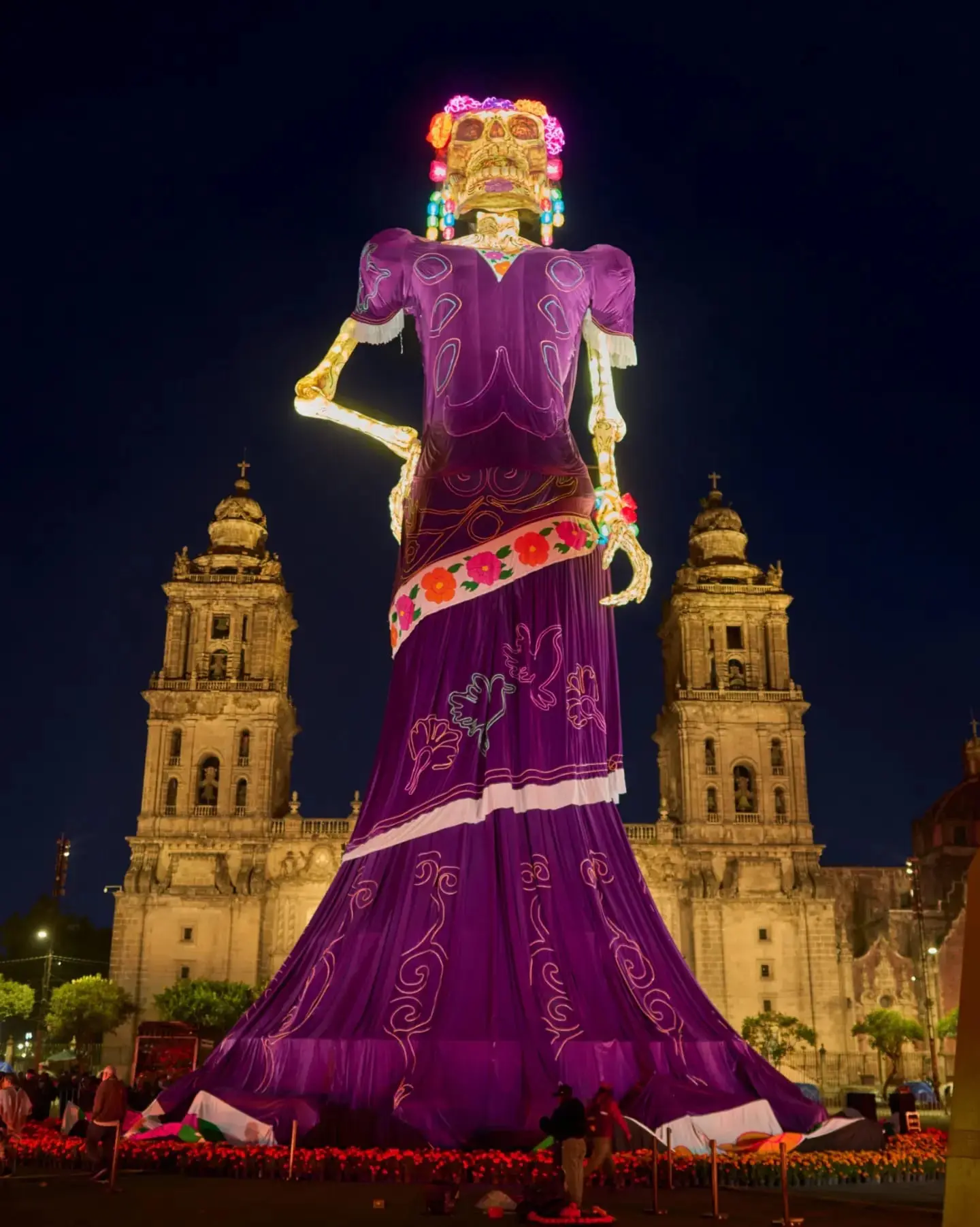
After dark, the sculpture lights up. around three kilometres of LED strips pick out its shape and ornaments. Seen from Francisco I. Madero Street, the Catrina appears above the rooftops. It looks like an enormous stage puppet by day and a glowing installation at night.
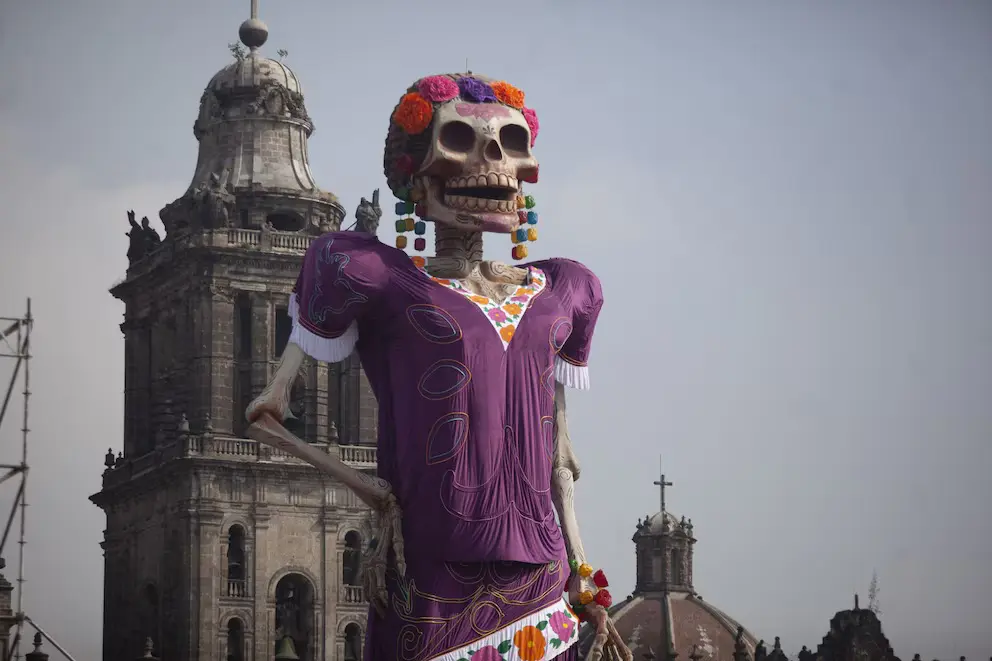
Where the Catrina came from
The figure has an interesting history. José Guadalupe Posada, a Mexican printmaker, created Calavera Garbancera as a satirical image of people imitating European aristocrats. His fashionable skeleton was later featured in Diego Rivera's work. Over time, La Catrina became one of the best-known symbols of Day of the Dead.
Día de Muertos is different from Halloween. Families remember relatives who have died, often arranging ofrendas with photographs, candles, food and flowers. La Catrina brings humour to the subject. Death appears dressed up for a party, complete with an elaborate hat or headdress.
A square filled with marigolds
Around this year's sculpture, the city laid out an ofrenda with roughly 70,000 cempasúchil marigold plants. Alebrijes, the colourful fantasy creatures of Mexican folk art, appear alongside representations of axolotls. For a few days the Zócalo has become an open-air exhibition.
The previous record belonged to a 28.15-metre Catrina in Puerto Vallarta. Mexico City's version is more than five metres taller. But the photographs are striking even without the measurements: a character that began as an image in a satirical print now changes the skyline of an entire square.
Images and project materials: Creapills. Facts cross-checked with La Jornada and Euronews.


No comments yet. Start the conversation.