
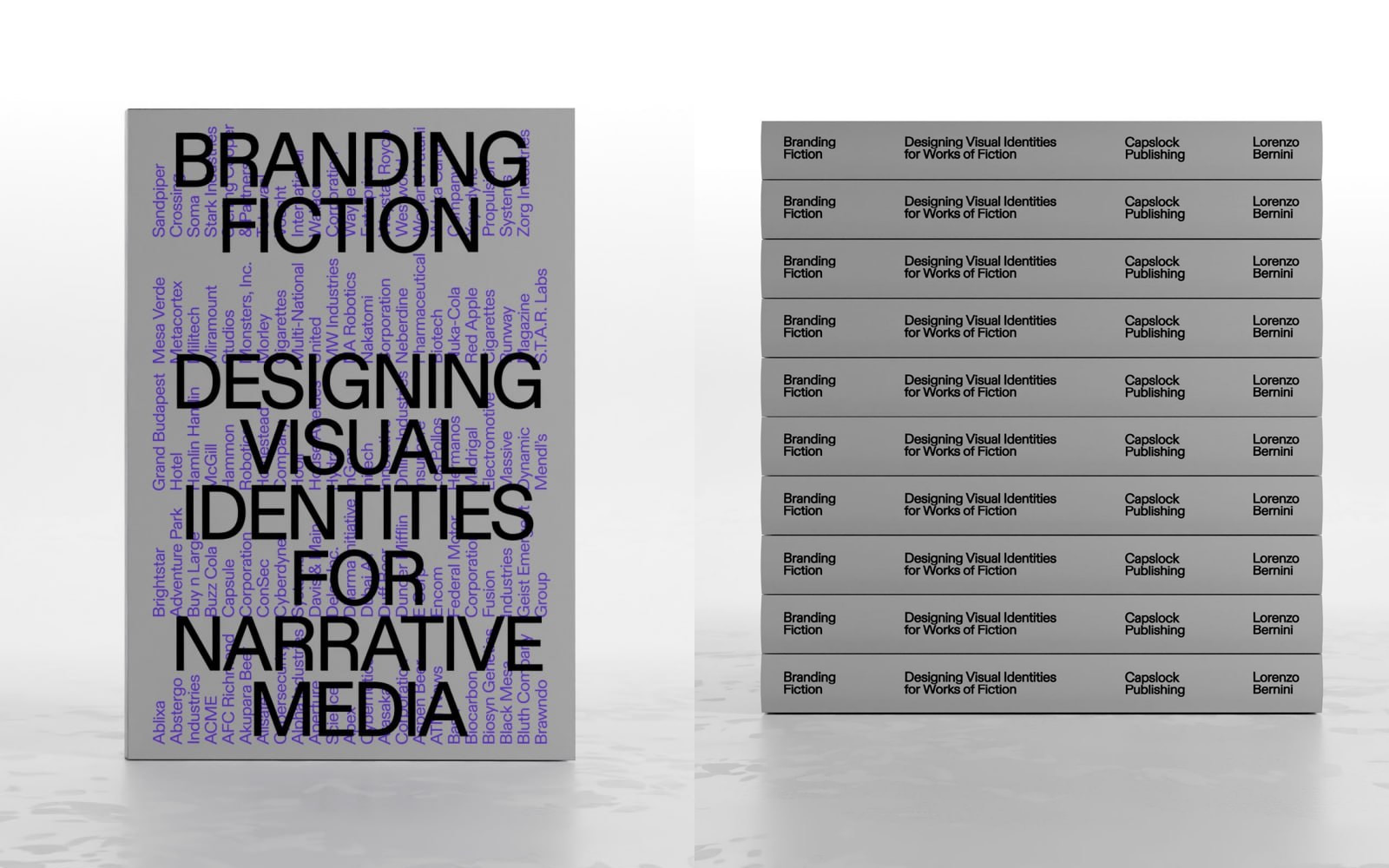
A logo on an office sign, a drinks label or an airline name can feel familiar even when we have only encountered it on screen. Lorenzo Bernini’s Branding Fiction explores invented brands and how their visual language helps us believe in the worlds of films, television series and video games.
Published by CAPSLOCK in 2025, the book builds on Fictional Brands Archive, an online collection created by the Milan-based designer and 3D artist. Across five chapters, it brings together research, interviews and visual references to examine the identities of imaginary companies and institutions.

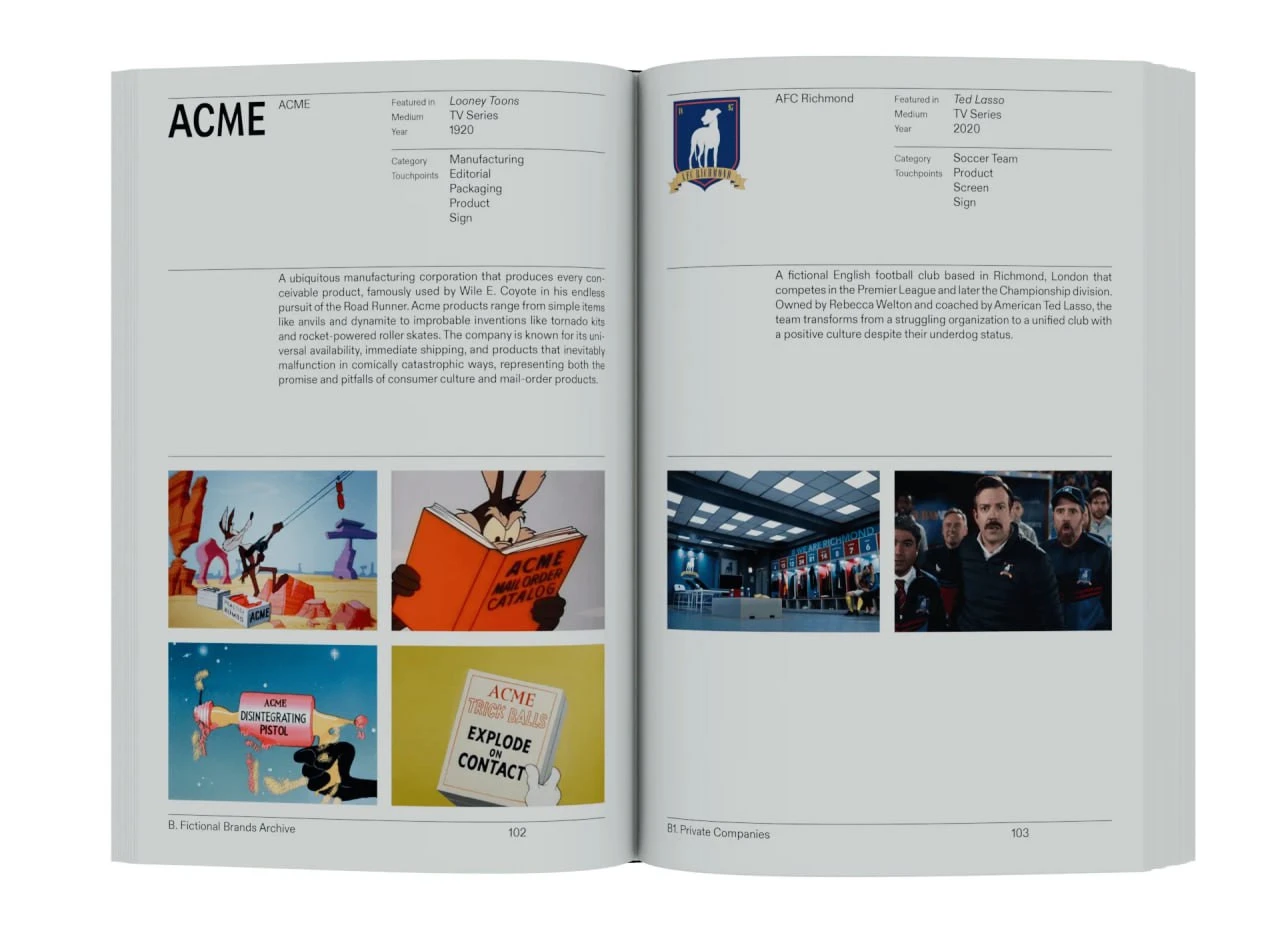
The spreads shown here feature Dunder Mifflin from The Office, E Corp from Mr. Robot, Duff Beer from The Simpsons, and AFC Richmond and Dubai Air from Ted Lasso. ACME, Umbrella Corporation and US Robotics appear alongside them. Each entry places a logo next to information about its fictional setting and examples of where the identity appears.

Seeing these brands on a page creates an opportunity to slow down. Signs, documents, clothing, packaging and screens can be examined side by side. Repeated names and symbols begin to suggest an organisation with its own habits, rules and history, extending beyond a single scene.
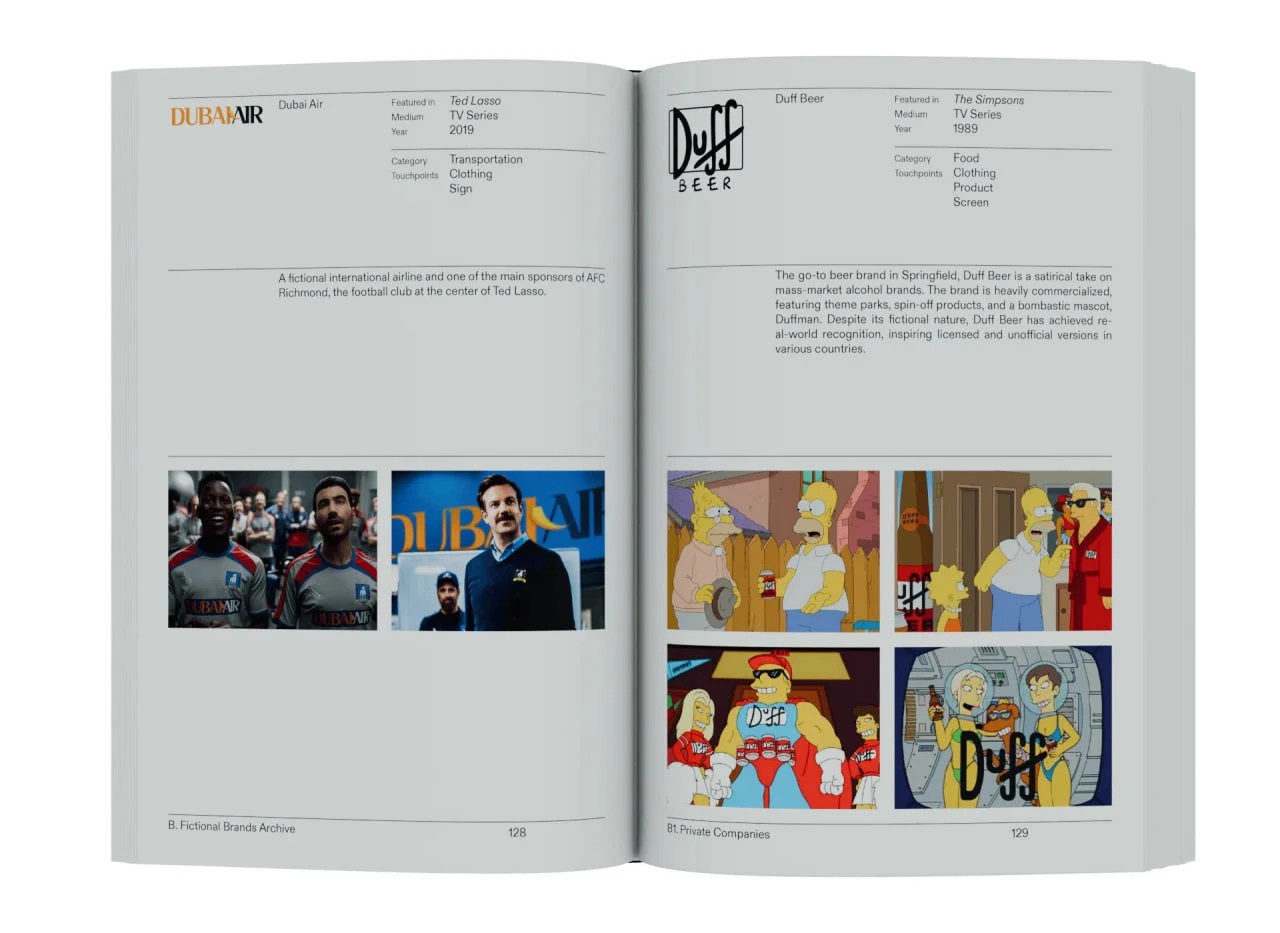
The selection also invites comparisons between very different visual personalities. Dunder Mifflin’s everyday office setting, E Corp’s corporate presence and Duff Beer’s recognisable packaging belong to distinct narrative worlds. In each case, design contributes to our impression of the organisation before we consciously stop to examine it.
For designers, these examples offer a useful way to revisit familiar tools: naming, typography, colour, symbols and consistency across applications. They also raise practical questions. Which details make an organisation believable? What gives it a particular character? How does a brand’s meaning change with its surroundings?

Branding Fiction brings attention back to details that often sit behind the main action. Those details help imaginary companies stay in our memory and make a story’s world feel as though it continues beyond the edge of the frame.
Book by Lorenzo Bernini. Published by CAPSLOCK.



No comments yet. Start the conversation.