
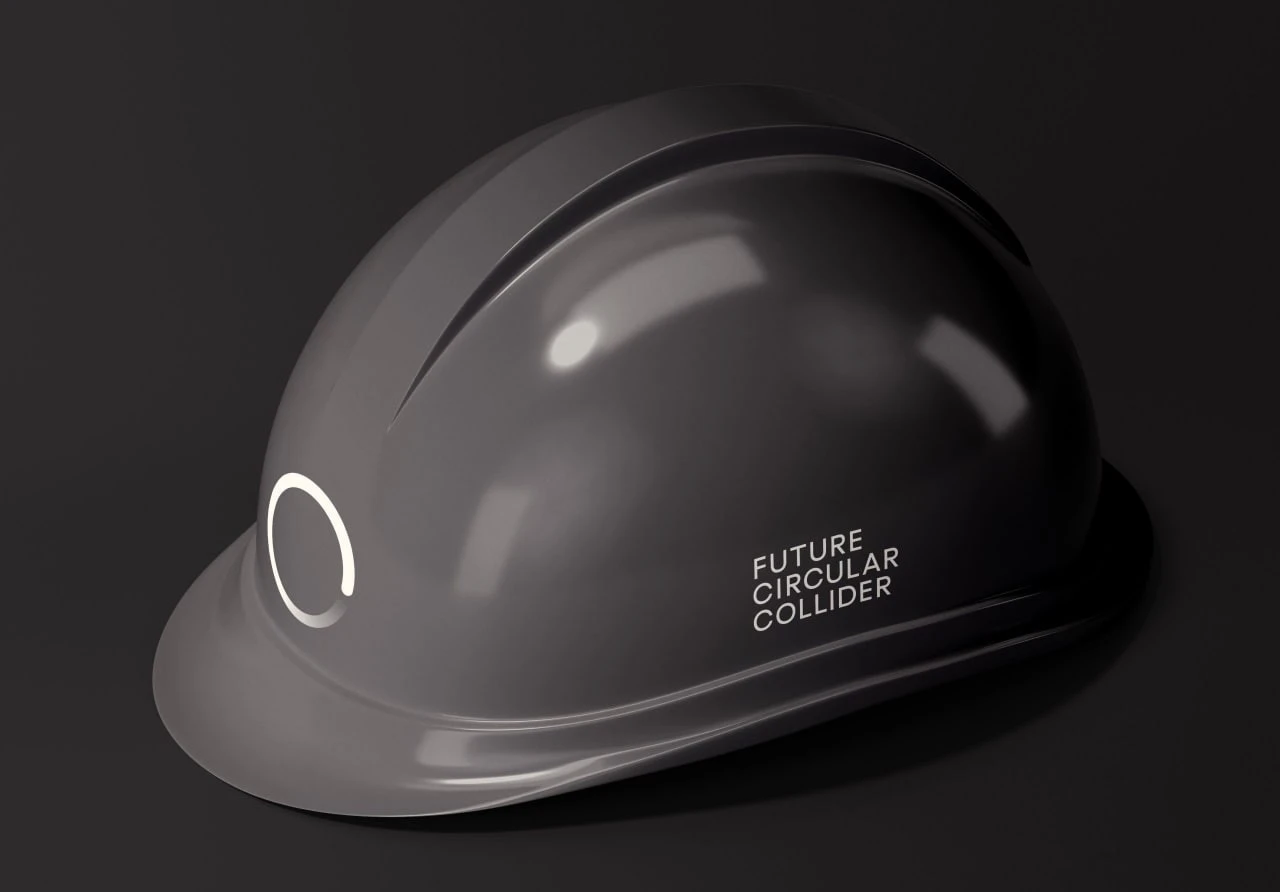
CERN, the European Organization for Nuclear Research, already has the Large Hadron Collider (LHC) in a circular tunnel 27 km in circumference. It collides protons, which belong to a family of particles called hadrons. This is where “hadron” in the name comes from. Instruments called detectors record the results of the collisions, helping scientists study particles and the laws of nature.
The Future Circular Collider (FCC) is being considered as a possible successor to the LHC. Its proposed circular tunnel would run for 90.7 km beneath parts of France and Switzerland. It would initially collide electrons with their antiparticles, positrons; a proton collider could follow in the same tunnel. The FCC has not been built: a decision on whether to proceed is expected around 2028. Bleed developed a visual identity for the project around the image of a ring.
Viewed from the front, the mark looks almost closed. One end of the line gradually fades while the other remains sharply defined. This gives the circle a direction and suggests movement even in a still image. Beside it, the name sits in three lines of capital letters. Their steady rhythm gives the eye an anchor as the symbol changes.
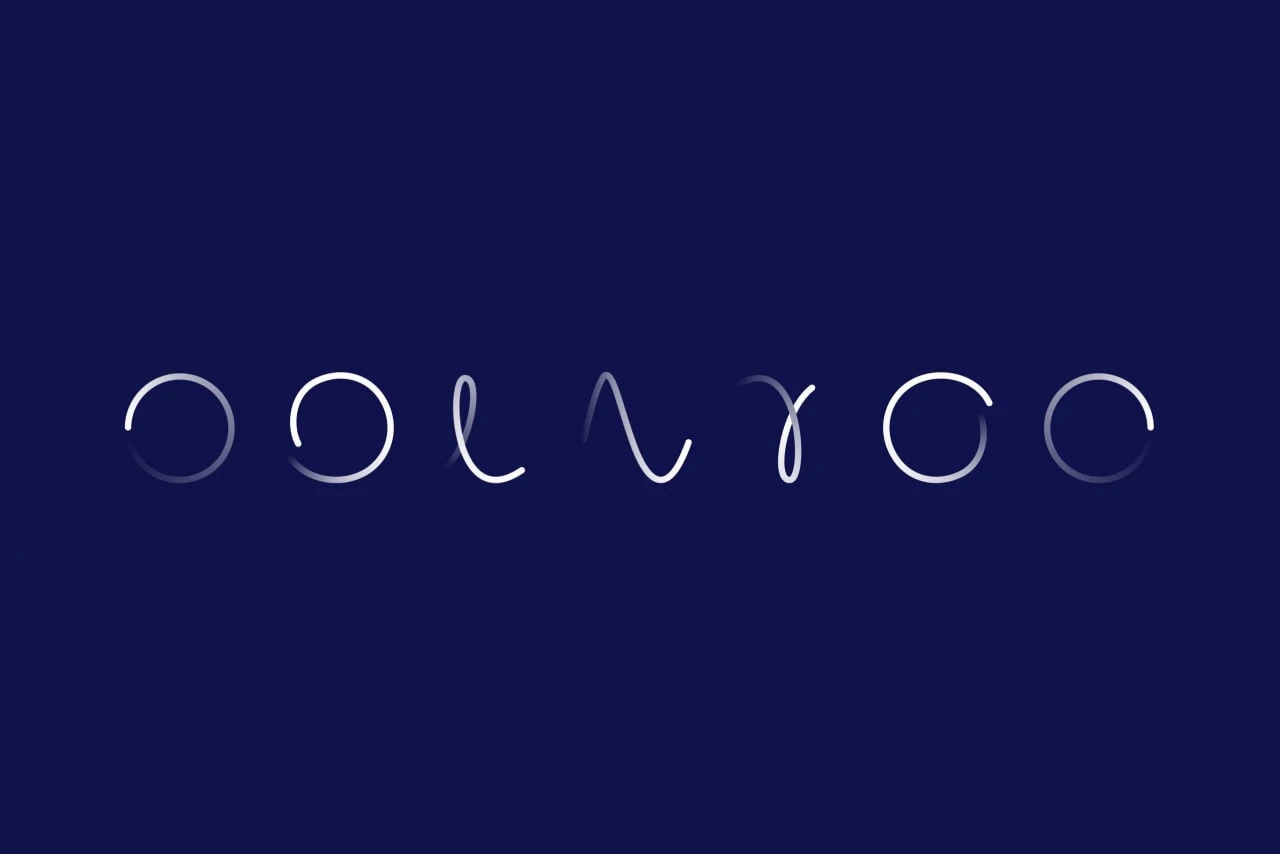
A circle worth seeing in motion
The short video makes the importance of viewpoint clear. The line turns, folds into a wave-like curve, forms loops and moves back towards a circle. Bright and translucent sections help suggest depth. The name stays in place throughout, keeping the mark connected to the project even when its silhouette becomes more elaborate.
In his portfolio, designer Marc Damm explains the concept through a change in how we look at a simple circle. That is a useful way to watch it: curiosity arrives when a familiar silhouette becomes less certain. The transformation is accessible without specialist knowledge of physics, while the act of looking more closely conveys something of research itself.
Taking movement onto paper
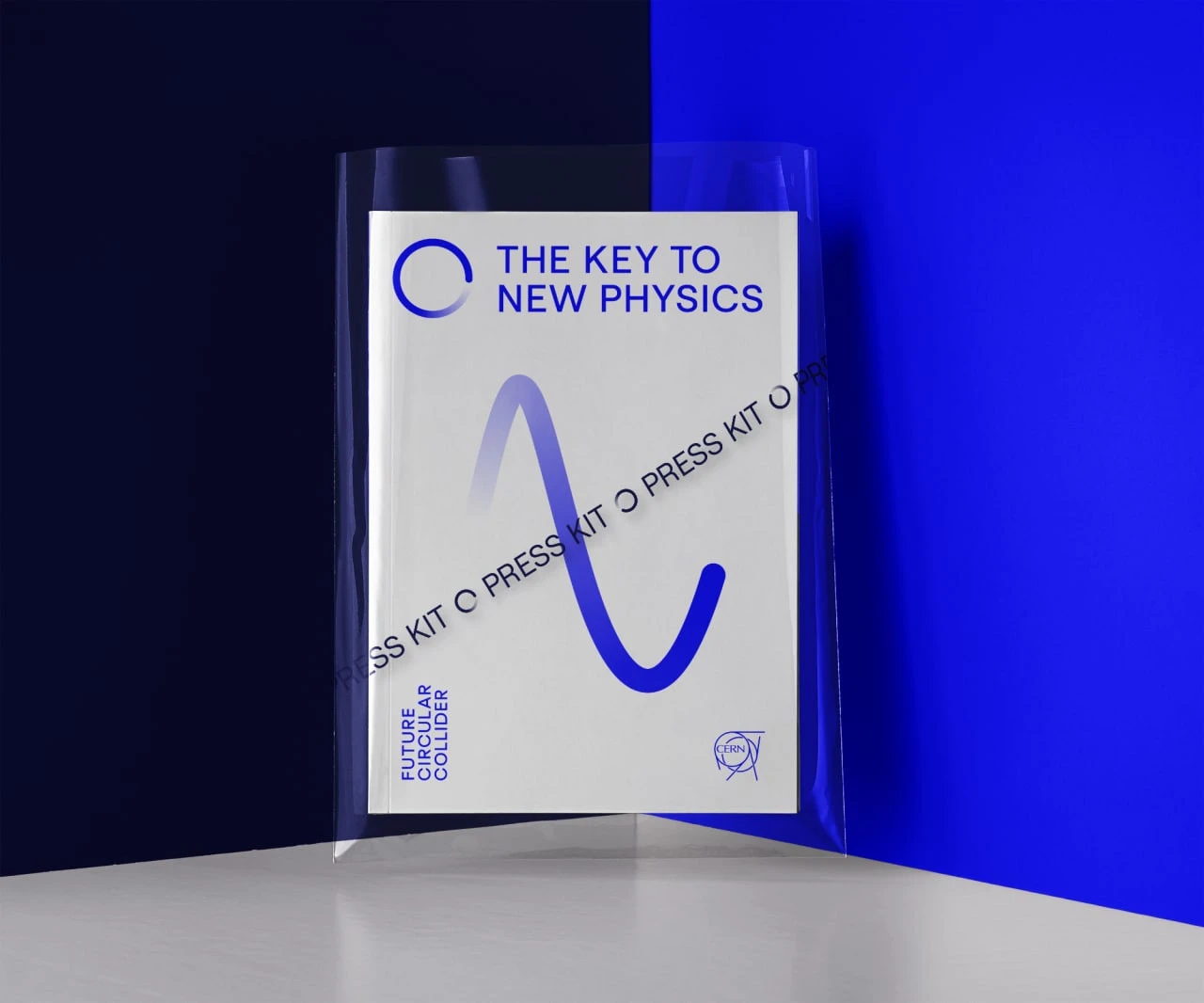
On paper, individual stages of the movement become compositions in their own right. A large wave-like shape occupies the centre of the press kit, while a small circle beside the headline preserves the recognisable mark. Diagonal lettering on the transparent sleeve adds another layer. The change in scale does useful work: the symbol is quick to identify, while the larger curve draws attention into the material.
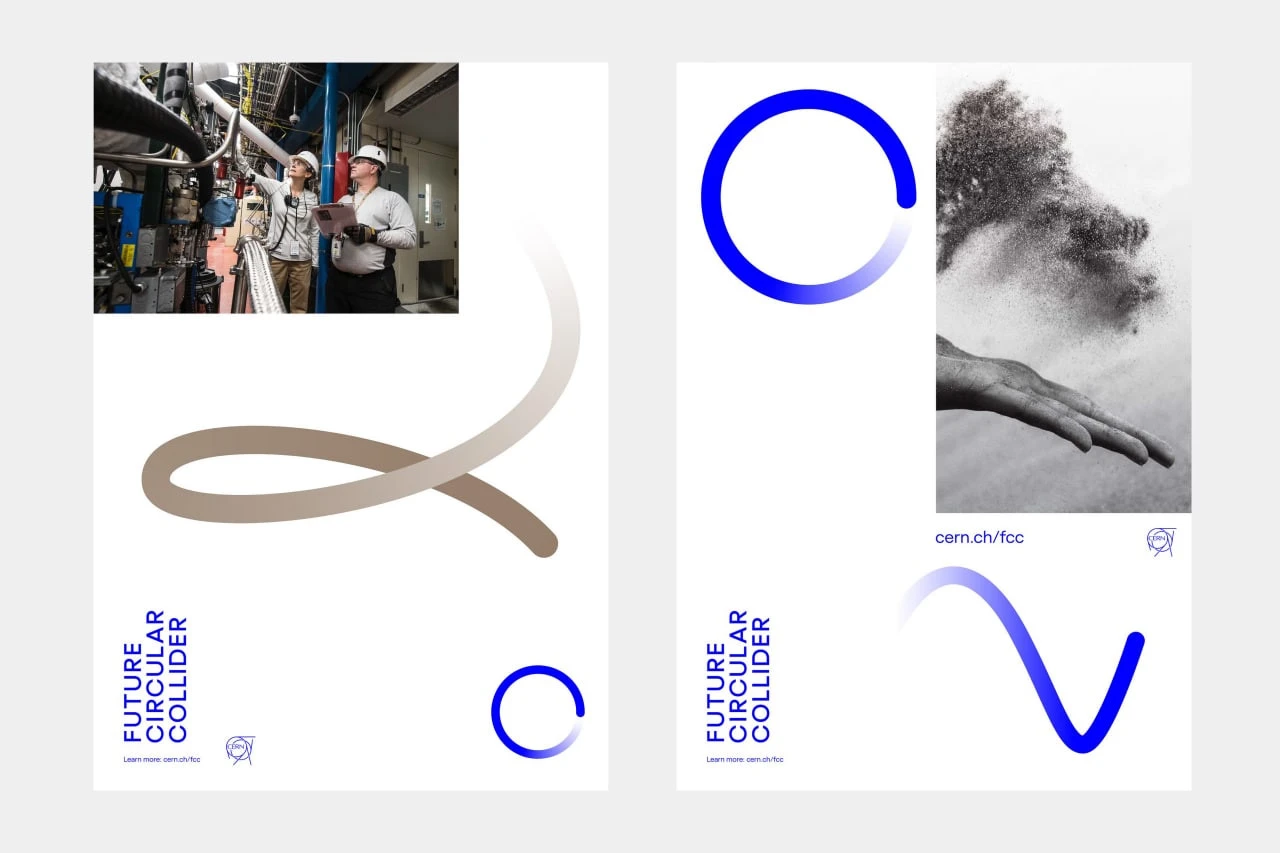
On the posters, the line travels through open space beside photographs, with the vertical name holding the edge of the composition. Dark blue, vivid blue, white and muted neutrals give the supplied examples different moods. The gradient lends volume to a simple outline, while broad, uncluttered areas leave room for text and imagery.
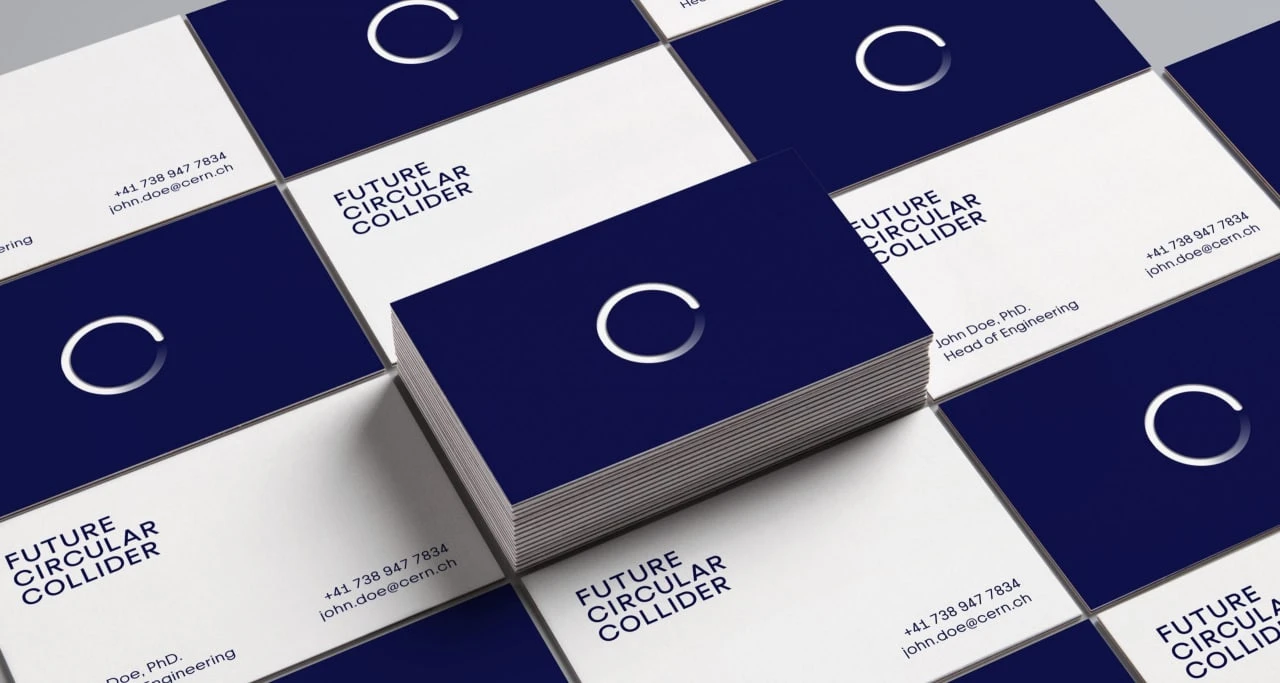
The jacket and business cards use a quieter version of the same visual language. A large circle on the back of the jacket reads at a distance. On the cards, the mark becomes smaller and the name and contact block occupy separate corners. These mockups demonstrate an important quality of the system: it has a distinctive still form for applications where animation is impossible.
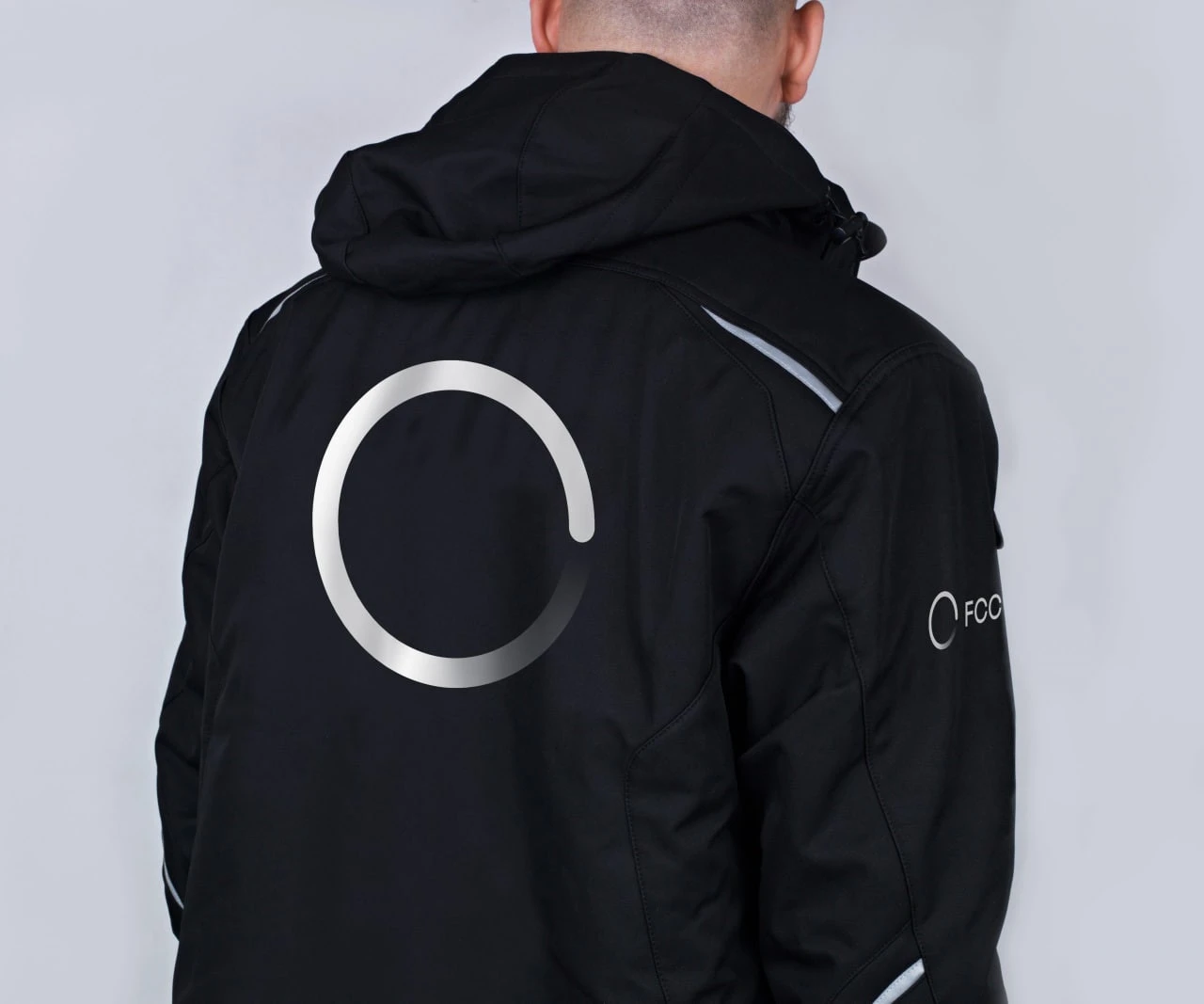
A visual language for future science
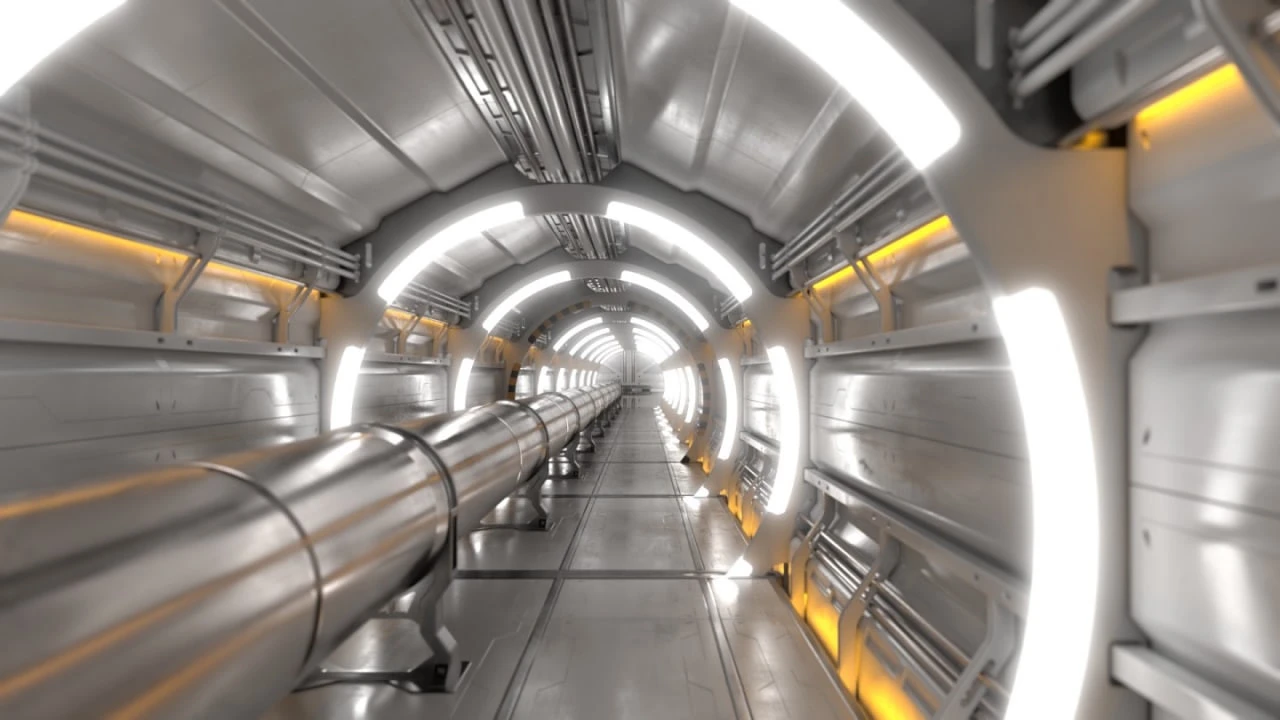
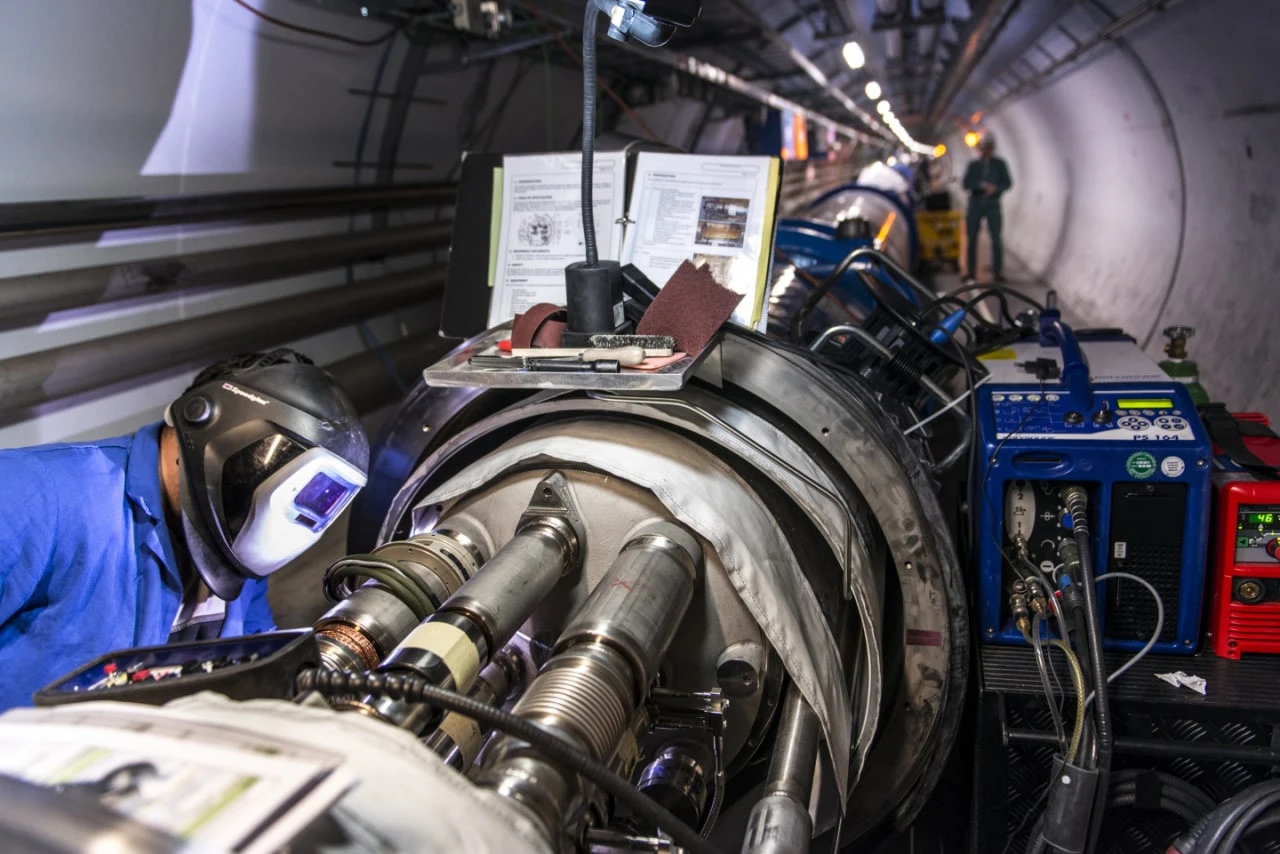
Alongside the graphic work, the selection includes a conceptual tunnel visualisation and a photograph of work on existing accelerator equipment. These images convey the scale of the scientific environment for which the identity was created.
The identity can already connect presentations, printed materials and workwear through a recognisable image. The simplicity of the basic mark leaves room for different pictures and different levels of complexity in the surrounding information.
The most useful design lesson appears when the video is paused at several points. Each viewpoint produces another graphic element, while the sequence explains how they belong together. It is a practical example of considering a mark in time, in space and on a flat surface as parts of the same design process.
Design: Bleed. Marc Damm’s portfolio credits Astrid Feldner with creative direction; Matyas Czel with the motion logo concept; Sara El Abed with motion design; and Markus Mooslechner / Terra Matter Studios with project coordination.
Sources: Bleed: CERN / Future Circular Collider · Marc Damm: The Sum of Its Particles · CERN: Future Circular Collider · Bleed: Studio· CERN: Accelerators · CERN: Large Hadron Collider



No comments yet. Start the conversation.