
12 × 12 Pixels for a Single Symbol
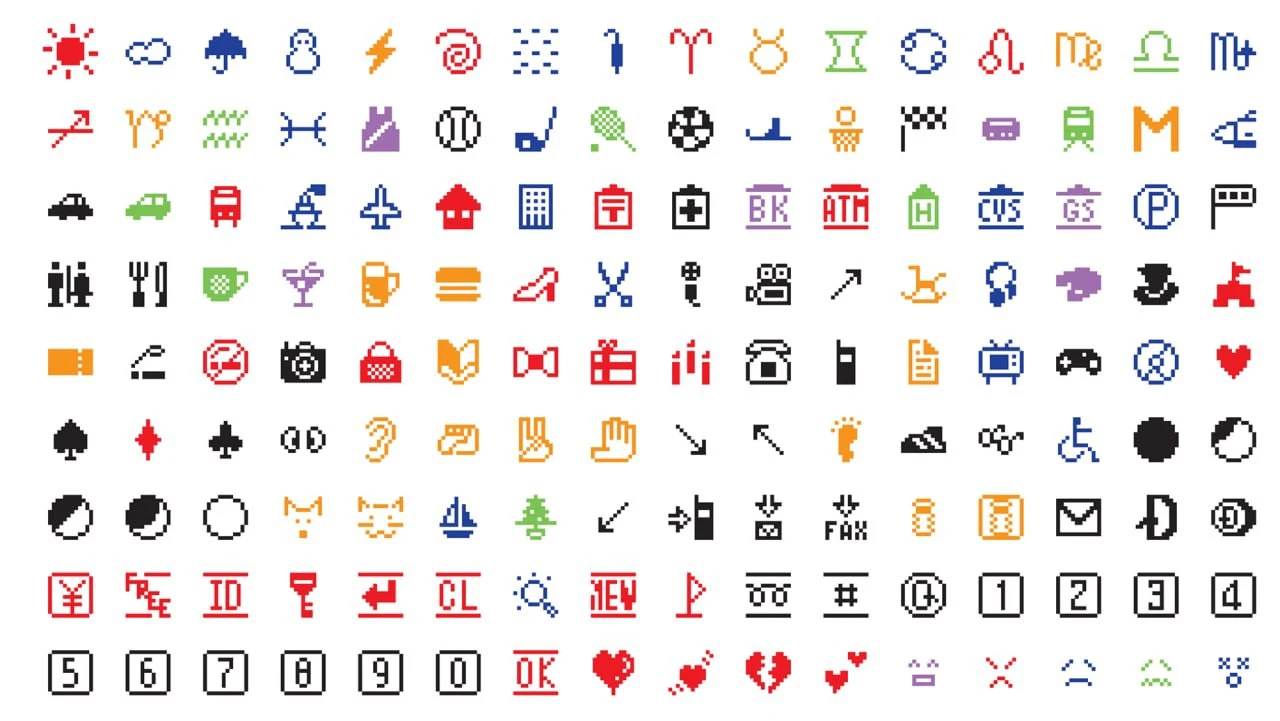
Kurita developed the emoji for i-mode, NTT DOCOMO’s mobile internet service. The pictograms helped people convey information on small screens and add tone to short messages. MoMA dates the work itself to 1998–1999; the set was released in 1999. M+ also credits architect Jun Aoki for the graphic designs.
Each symbol had to fit into a 12 × 12 pixel grid. With just 144 cells available, forms had to be reduced to their most recognisable features. A train needs its distinctive front window; an umbrella, a canopy and handle; a cocktail glass, a triangular bowl on a stem. The edges remain blocky, yet the objects are easy to read.
The sheet reveals the range of subjects: weather, transport, food, sports, service symbols and emotions. There are only a few faces. Everyday objects and signs do much of the work, replacing a word or adding something to a message.
Were They Really the First?
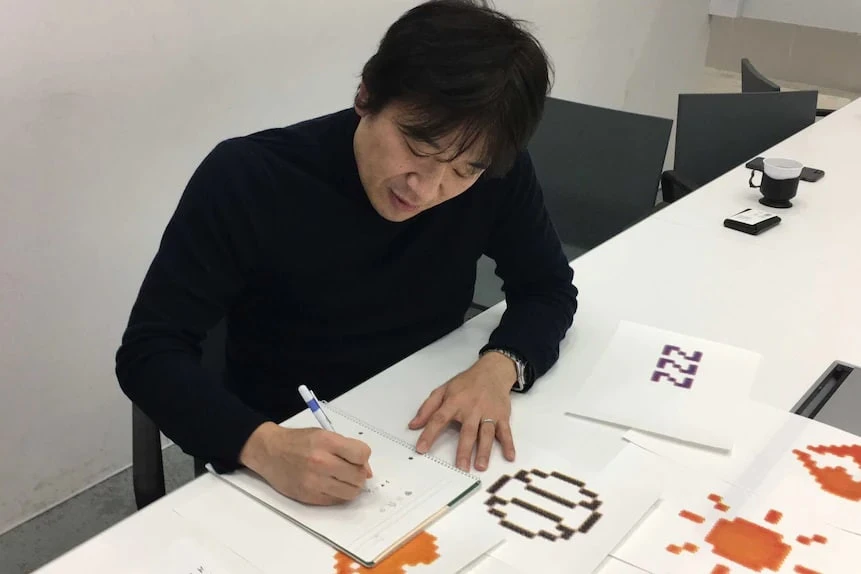
Kurita’s set is often described as the first emoji, but the history goes back further. Research by the Emojipedia archive documented 90 emoji on the J-Phone SkyWalker DP-211SW, released in 1997. It is more accurate to describe NTT DOCOMO’s contribution as an influential early set than to credit one person with inventing every emoji.
From a Phone to a Museum Collection
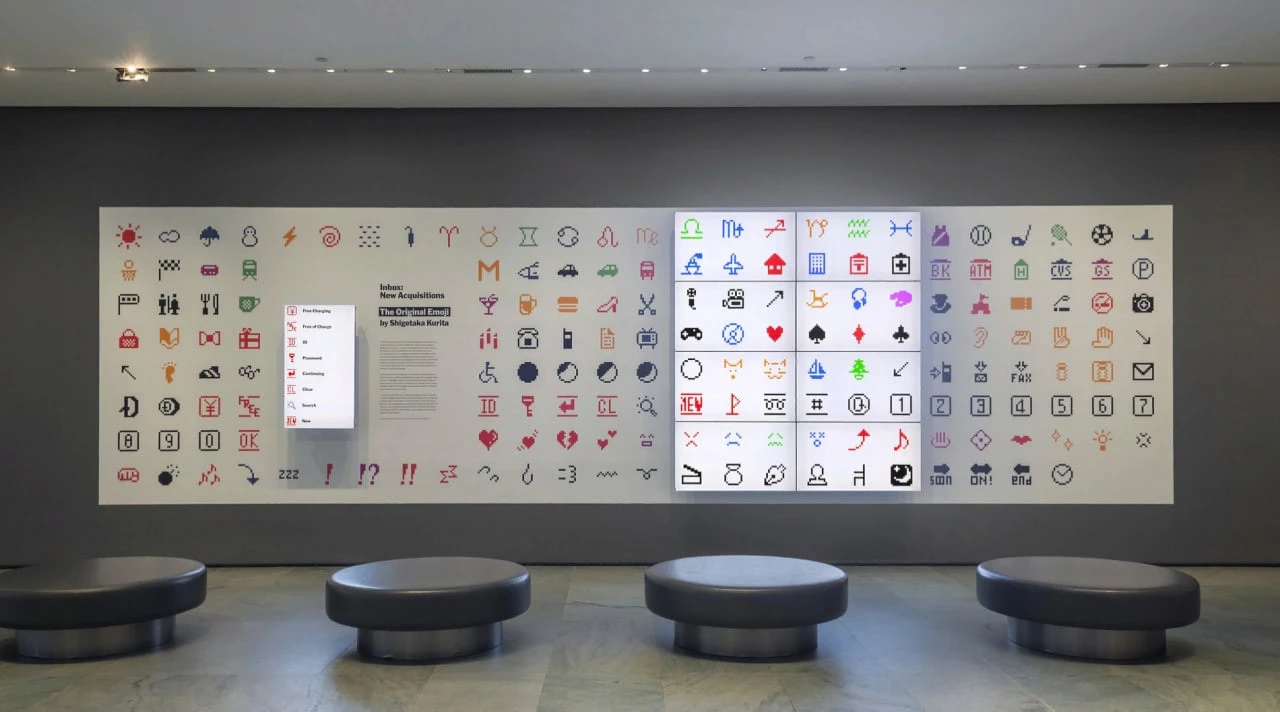
NTT DOCOMO donated the set to MoMA in 2016. The museum presented it in “Inbox: The Original Emoji, by Shigetaka Kurita,” which ran from December 9, 2016 to March 12, 2017. Enlarged on a gallery wall, the pictograms invited a closer look at something that had occupied very little space on a phone.
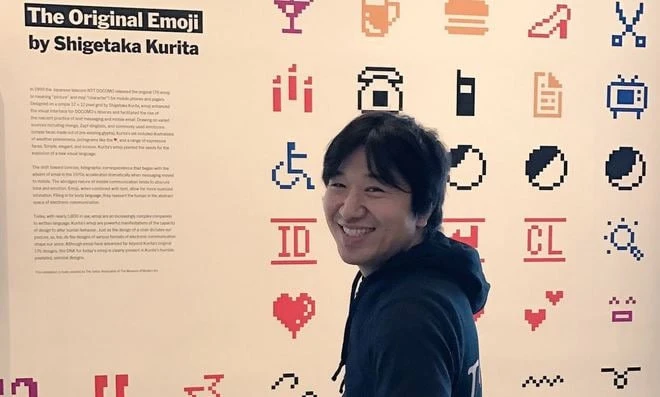
Speaking to ABC News in February 2017, Kurita described how it felt to have his work enter the museum’s collection:
It still feels like a dream.
Shigetaka Kurita, ABC News, 2017
The exhibition changes how we look at emoji. Rather than quickly choosing a symbol, we can compare their silhouettes, rhythm and degrees of simplification.
Sources: Shigetaka Kurita. Emoji. 1998–1999 | MoMA · Inbox: The Original Emoji, by Shigetaka Kurita | MoMA · Which Old-School Emoji Are You? | M+ · Correcting the Record on the First Emoji Set · Emoji inventor Shigetaka Kurita says MoMA New York acquisition ‘feels like a dream’ | ABC News

No comments yet. Start the conversation.